SEO Software Tools
Calculating...
Oct 2026
15 Best BrightEdge Alternatives in 2026 (SEO + AI Search)
Compare 15 BrightEdge alternatives for 2026, from Semrush and Ahrefs to AI-search trackers like Profound and Omnia. Features, pricing and how to choose.

Key takeaways
- BrightEdge alternatives now split into two camps: all-in-one SEO suites (Semrush, Ahrefs, Conductor, seoClarity) and dedicated AI-search visibility trackers (Profound, Omnia, Peec AI, Otterly, Scrunch).
- Enterprise buyers usually leave BrightEdge over cost and lock-in. Contract data puts the average BrightEdge deal near $127,000 a year, so a switch is as much a budget decision as a feature one.
- Search moved to two surfaces. ChatGPT passed 900 million weekly users in 2026 and Google AI Overviews reach more than 2 billion people a month, so tracking Google rankings alone no longer covers where buyers look.
- If you only need classic SEO, Semrush or Ahrefs cover most of BrightEdge at a fraction of the price. If the goal is AI visibility, pair a suite with a purpose-built citation tracker.
- The tool is half the job. Getting cited in AI answers comes from earned mentions, entity consistency, and digital PR, not from a dashboard alone.
The best BrightEdge alternatives in 2026 fall into two groups. All-in-one SEO suites like Semrush, Ahrefs, Conductor, and seoClarity replace BrightEdge for keyword tracking and content work at a lower price. Dedicated AI-visibility trackers like Profound, Omnia, and Peec AI cover the newer job: measuring how often your brand is cited in ChatGPT, Perplexity, and Google AI Overviews.
BrightEdge is a widely used enterprise SEO platform known for AI-driven recommendations, keyword tracking, and content performance analytics. It does a lot well. It is also expensive, built for large teams, and, like every legacy SEO suite, it is still catching up to a search landscape that now runs across Google and a handful of AI answer engines at the same time. That combination is why so many teams start shopping for a BrightEdge alternative.
This guide covers 15 alternatives across both camps. For each classic SEO tool we look at features, who it suits, real user sentiment, and 2026 pricing. Then we cover the AI-search visibility trackers most BrightEdge roundups still ignore, a framework for choosing between them, and how to move off BrightEdge without losing your history. We run these tools every day inside MADX client campaigns, so the verdicts are ours, not the vendors'.
What BrightEdge does well
It is worth being fair about what you would be replacing. BrightEdge earned its enterprise reputation for good reasons, and a switch only makes sense if you know what you are trading away.
Its strengths are real. The Data Cube holds a large keyword and content dataset that few tools match. Its recommendations engine turns that data into specific, prioritised actions, which is valuable for big teams that need direction at scale. Reporting is enterprise-grade, with the dashboards and permissions large marketing orgs expect. Onboarding and support are hands-on, so a 40-person team can get moving without building everything themselves. And its more recent AI Catalyst module was an early move into tracking generative results. For a large in-house team with the budget and headcount to use all of it, BrightEdge is still a capable platform.
The trade-offs are cost, complexity, and pace. You pay enterprise rates whether or not you use the full suite, the platform takes time to learn, and, like every legacy tool, it is racing to keep up with AI search rather than having been built for it. Those are the pressures that send teams looking.
Why teams look for a BrightEdge alternative in 2026
Most switches come down to three things: price, fit, and the shift to AI search.
Price and lock-in. BrightEdge sells annual enterprise contracts, not a self-serve monthly plan. Vendr contract data compiled by AuthorityTech (2026) puts the average BrightEdge deal near $127,000 a year. For a mid-market SaaS team, that is hard to justify when Semrush or Ahrefs deliver most of the daily workflow for a few thousand dollars a year.
Fit. BrightEdge is tuned for large in-house enterprise teams with the headcount to use it. Smaller teams and agencies often pay for capacity they never touch, and want something faster to onboard and easier to run day to day.
The AI-search shift. This is the big one. Search is no longer a single surface. ChatGPT passed 900 million weekly active users in February 2026, and Google AI Overviews now reach more than 2 billion people a month. When an AI Overview appears, Pew Research found only about 8% of searches end in a click, down from 15% when there is no Overview. Buyers now form opinions inside AI answers before they ever reach your site. A platform that only tracks blue-link rankings measures a shrinking slice of the picture, and that gap is pushing teams toward tools that watch both surfaces.
Classic SEO suite or dedicated AI-visibility tracker?
Before you compare logos, decide which job you are hiring the tool to do. There are two, and most BrightEdge alternatives are strong at one but not the other.
All-in-one SEO suites (Semrush, Ahrefs, Moz, Conductor, seoClarity, Serpstat) own the classic workflow: keyword research, rank tracking, backlinks, technical audits, and content optimisation. Several now bolt on an AI-visibility module, but measuring AI citations is not their core job. Pick a suite if your priority is still Google rankings, content, and links.
Dedicated AI-visibility trackers (Profound, Omnia, Peec AI, Otterly AI, Scrunch AI) do one thing the suites do loosely: they run thousands of prompts across ChatGPT, Perplexity, Gemini, and AI Overviews, then report how often you are mentioned, which sources get cited, and how your share of voice moves. Pick one of these if leadership is asking, "are we showing up in AI answers?" and you need a real number.
Plenty of teams end up running one of each. That hybrid stack, a suite for search plus a tracker for AI, is now the most common setup we see when a client leaves BrightEdge.
The best BrightEdge alternatives at a glance
ToolTypeBest forFrom (2026)SemrushSuiteAll-round SEO and content$139.95/moAhrefsSuiteBacklinks and keyword data$129/moConductorSuite (enterprise)Enterprise content SEOCustomseoClaritySuite (enterprise)Large-scale automationCustomMoz ProSuiteSEO fundamentals$79/moProfoundAI trackerEnterprise AI visibilityCustomOmniaAI trackerAI visibility with actions~$85/moPeec AIAI trackerTeams and agencies~$95/moOtterly AIAI trackerEntry-level monitoring~$29/moScrunch AIAI trackerEnterprise AI monitoring~$250/mo
Pricing is list pricing at the time of writing (2026) and changes often. Serpstat, Similarweb, Dragon Metrics, Raven Tools, and WooRank round out the 15 and are covered in full below.
The 10 best all-in-one BrightEdge alternatives
These cover the classic SEO workflow BrightEdge is built around. We kept the original ten, refreshed the pricing, and added where each one now stands on AI search.
1. Semrush
Semrush is a comprehensive digital marketing suite covering SEO, PPC, competitive research, and content. It is the most well-rounded BrightEdge alternative and suits everyone from small teams to enterprises.

Features: keyword research and rank tracking, competitor analysis, backlink audits, technical site audits, on-page recommendations, and an AI Toolkit that tracks brand mentions across AI Overviews and ChatGPT.
Best for: teams that want one platform for search, content, and paid, with an AI-visibility add-on.
User sentiment: users praise the breadth and data depth. The common complaint is a learning curve, and that the best AI-visibility features sit in higher tiers or paid add-ons.
Pricing (2026): Pro from $139.95/month, Guru $249.95/month, Business $499.95/month, per Semrush.
Semrush vs BrightEdge: far cheaper and self-serve, with comparable keyword and content tooling. BrightEdge still leads on white-glove enterprise support and large-account automation.
2. Ahrefs
Ahrefs is a powerful SEO toolset best known for the depth and accuracy of its backlink and keyword data. Its Brand Radar feature now tracks how often domains and brands appear in AI Overviews and AI chatbots, which makes it a genuine two-surface option.

Features: Site Explorer and backlink analysis, Keywords Explorer, Site Audit, Content Explorer, rank tracking, and Brand Radar for AI mentions.
Best for: teams that live in link and keyword data and want AI-mention tracking in the same login.
User sentiment: loved for data quality. Some users note the content-optimisation workflow is lighter than a dedicated writing tool.
Pricing (2026): Lite from $129/month, Standard $249/month, per Ahrefs.
Ahrefs vs BrightEdge: stronger backlink index and cheaper, with a credible AI-visibility layer in Brand Radar. BrightEdge offers deeper enterprise content workflows and managed onboarding.
3. Moz Pro
Moz Pro is a full-suite SEO platform for keyword research, rank tracking, link analysis, and site health, with the well-known Domain Authority metric. It has added AI-search tracking that shows when your pages appear in AI Overviews and ChatGPT results.

Features: Keyword Explorer, Site Crawl and audit, backlink analysis, Domain Authority, on-page optimisation, and local SEO.
Best for: small and mid-sized teams that want approachable SEO fundamentals.
User sentiment: praised for its clean interface and DA metric. The backlink index is smaller than Ahrefs.
Pricing (2026): Standard from $79/month, per Moz. (The older version of this guide listed $14, which is long out of date.)
Moz Pro vs BrightEdge: ideal for teams focused on SEO basics, where BrightEdge targets large enterprises with automation and managed service.
4. Serpstat
Serpstat is an affordable all-in-one platform covering keyword research, competitor tracking, backlink analysis, site audits, and PPC research. It is a budget-friendly way to replace the daily BrightEdge workflow.
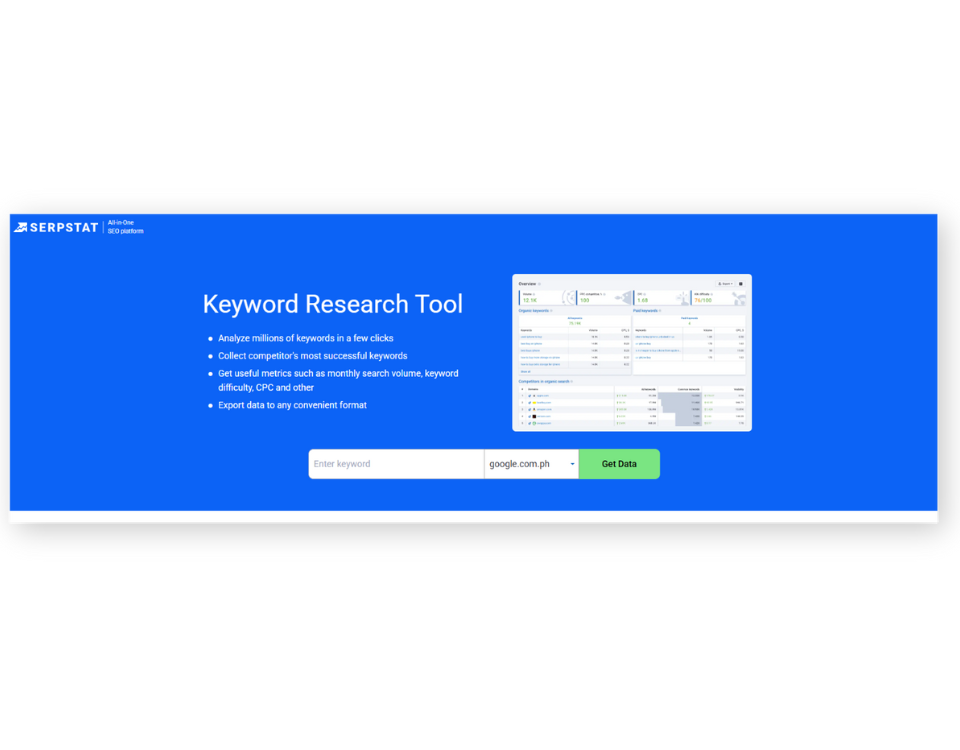
Features: keyword research, competitor analysis, SEO audit, backlink analysis, and paid search research.
Best for: smaller teams and agencies on a tight budget.
User sentiment: valued for price and breadth. Keyword and backlink databases are smaller than the market leaders.
Pricing (2026): paid plans start around $59/month, per Serpstat. Re-check as tiers change.
Serpstat vs BrightEdge: a fraction of the cost with the core toolkit, minus BrightEdge's enterprise automation and support.
5. Conductor
Conductor is an enterprise organic-marketing platform and the closest like-for-like BrightEdge competitor. It combines content intelligence, keyword and rank tracking, technical monitoring, and, more recently, AI answer tracking for teams that want everything in one enterprise suite.

Features: content guidance, keyword research and tracking, technical SEO monitoring, custom reporting, workflow collaboration, and AI-search insights.
Best for: enterprises that want a content-led BrightEdge replacement without dropping to a self-serve tool.
User sentiment: praised for content intelligence and support. Priced at the enterprise end.
Pricing (2026): custom, typically enterprise annual contracts.
Conductor vs BrightEdge: both target large teams. Conductor leans into content and customer experience, while BrightEdge emphasises automation and its AI Catalyst module. See our full Conductor vs BrightEdge comparison.
6. seoClarity
seoClarity is an enterprise SEO platform built around automation, a large keyword index, and real-time data. It added AI-search tracking early, so it now reports both classic rankings and AI answer presence.

Features: AI-driven recommendations, real-time rank tracking, content performance analysis, backlink insights, and competitive analysis at enterprise scale.
Best for: large teams that want automation and deep data, and have the expertise to use it.
User sentiment: strong on automation and scale. It rewards technical users and can feel heavy for smaller teams.
Pricing (2026): custom, based on scope.
seoClarity vs BrightEdge: comparable enterprise capability. seoClarity is often chosen for its data access and flexibility, BrightEdge for its guided recommendations.
7. Similarweb
Similarweb is a digital-intelligence platform for traffic analytics, competitor research, and market insight. It reaches beyond SEO into whole-of-market benchmarking, which is why teams pair it with a ranking tool rather than treating it as a straight swap.

Features: website traffic analytics, competitor benchmarking, keyword and search insights, industry trend analysis, and advertising intelligence.
Best for: teams that need market and competitor intelligence alongside SEO.
User sentiment: valued for traffic and market data. It is not a full SEO automation suite, and the top tiers are expensive.
Pricing (2026): custom by package; its web-intelligence tiers start in the enterprise range.
Similarweb vs BrightEdge: better for market and traffic intelligence, weaker as a day-to-day SEO workflow. Many teams run both.
8. Dragon Metrics
Dragon Metrics is a cloud SEO platform with a strong focus on international SEO, which makes it a good fit for brands tracking multiple regions and languages.

Features: global rank tracking, backlink analysis, on-page optimisation, competitor research, and automated reporting.
Best for: multi-region and multilingual teams.
User sentiment: praised for international tracking and clear reporting. Lighter on AI-era automation than the enterprise suites.
Pricing (2026): plans from around $99/month.
Dragon Metrics vs BrightEdge: better for international campaigns at a lower price, with less enterprise automation.
9. Raven Tools
Raven Tools is an SEO and reporting platform aimed at agencies, with site audits, backlink monitoring, and white-label client reports.

Features: SEO site audits, competitor analysis, backlink monitoring, marketing analytics, and automated white-label reporting.
Best for: agencies that need client-ready reporting more than deep research data.
User sentiment: liked for reporting and value. Content optimisation is thinner than BrightEdge.
Pricing (2026): plans from around $39/month.
Raven Tools vs BrightEdge: a budget agency reporting tool rather than an enterprise platform.
10. WooRank
WooRank offers instant website audits, keyword tracking, and competitor benchmarking in a simple, approachable package.

Features: automated site audits, keyword tracking, competitor analysis, backlink monitoring, and shareable SEO reports.
Best for: small businesses and marketers who want quick audits without a heavy platform.
User sentiment: praised for ease of use. It is not built for large-scale keyword or content operations.
Pricing (2026): a free instant audit plus paid monthly plans; check the current tiers on the WooRank site.
WooRank vs BrightEdge: quick audits and benchmarking for small teams, where BrightEdge is enterprise SEO at scale.
AI-search visibility trackers: the BrightEdge alternatives most roundups miss
Here is the gap in almost every "BrightEdge alternatives" list still online: none of them cover the tools built specifically to measure AI search. If your real question is "how often does ChatGPT or Google's AI Overview recommend us?", a classic suite gives you a rough proxy at best. These five answer it directly.
11. Profound
Profound is an enterprise answer-engine-insights platform that tracks how brands appear across ChatGPT, Perplexity, Google AI Overviews, and other engines. It reports citation sources, sentiment, and share of voice, and is aimed at larger teams that treat AI visibility as a board-level metric.
Best for: enterprises that need rigorous, defensible AI-visibility reporting. Pricing: custom.
12. Omnia
Omnia tracks brand visibility across AI engines and adds an action layer, turning gaps into a prioritised backlog of things to fix, rather than a dashboard you stare at.
Best for: teams that want measurement and a to-do list in one place. Pricing: from roughly $85/month.
13. Peec AI
Peec AI is a fast-growing AI-visibility tracker popular with agencies and in-house teams for prompt monitoring, competitor comparison, and citation tracking across the major engines.
Best for: agencies and teams that want clean reporting across clients. Pricing: from around $95/month.
14. Otterly AI
Otterly AI is one of the more affordable entry points into AI-search monitoring, tracking brand mentions and links across ChatGPT, Perplexity, and Google's AI results.
Best for: smaller teams starting AI-visibility tracking without an enterprise budget. Pricing: from around $29/month.
15. Scrunch AI
Scrunch AI monitors how brands show up across AI platforms and focuses on the enterprise use case, with broad engine coverage and team workflows.
Best for: larger organisations tracking AI presence across many markets. Pricing: from around $250/month.
Prices for the AI trackers above are 2026 list pricing as reported in public roundups such as Omnia's comparison, and this category reprices fast. If you already run Semrush, Ahrefs, or Conductor, check their built-in AI modules first before adding a separate tracker. For the full picture, see our guide to the best AI SEO tools.
How AI search changes the BrightEdge alternative you should pick
Swapping one dashboard for another will not move your AI visibility on its own. We have watched clients do exactly that and see no change, because the tool measures the problem, it does not solve it. What actually gets you cited in AI answers is the work behind the score.
AI engines do not simply count how often your brand is mentioned. They weigh how consistently your brand is corroborated across independent, trusted sources. That means three things matter more than which tracker you buy. First, earned mentions and digital PR: coverage on the publications and communities AI models already trust. Second, entity consistency: your site, schema, author profiles, and third-party listings all telling one coherent story. Third, content built to be quoted: definition-first answers, named-source statistics, and clean structure an engine can lift.
So the honest way to choose a BrightEdge alternative is to match the tool to the work. If you are investing in digital PR and link building to build that corroboration, a citation tracker tells you whether it is landing. If you are still fixing rankings and technical health, a classic suite is the better buy. For the full playbook on getting quoted by AI engines, read our generative engine optimisation guide and our breakdown of how to rank in AI search results.
How to choose the right BrightEdge alternative
Run any shortlist through five questions before you buy.
- What is the core job? Classic SEO, AI visibility, or both. Answer this first and half the list drops away.
- What is the real budget? Self-serve suites run from about $80 to $500 a month. Enterprise platforms and serious AI trackers run into five figures a year. Set the number before the demos.
- Which engines and regions matter? If you sell internationally, check language and country coverage. If AI matters, confirm which engines the tool actually tracks (ChatGPT, Perplexity, Gemini, AI Overviews).
- Does it just report, or does it help you act? A score with no next step is a vanity metric. Favour tools that surface what to fix.
- How fast can the team adopt it? A powerful platform nobody uses is worse value than a simpler one the team lives in. Run a two-week pilot before committing to an annual contract.
Can you run BrightEdge and an alternative together?
Yes, and plenty of enterprise teams do. If BrightEdge already runs your content and reporting workflows, the cleanest move is often to keep it and add a dedicated AI-visibility tracker beside it, rather than rip everything out. That gives you BrightEdge's enterprise SEO operations plus a sharper read on AI citations from a tool built for it. The question is not always "replace BrightEdge", it is "what is the smallest change that closes the gap I actually have".
Migrating off BrightEdge without losing your history
If you do switch, protect your data before the contract lapses. Export your keyword lists, historical rankings, reports, and any custom dashboards while you still have access, because most of it does not transfer automatically. Line the new tool up and run both in parallel for a month so you can reconcile the numbers, since every platform measures rankings and traffic slightly differently. Rebuild your core reports and alerts in the new system before you switch stakeholders over, and keep your exported history as the bridge between old and new baselines. None of this is hard, but skipping it is how teams lose a year of trend data overnight.
Final thoughts
The right BrightEdge alternative depends on the job and the budget. For a full-featured, self-serve SEO platform, Semrush and Ahrefs cover most of BrightEdge at a fraction of the cost. For an enterprise content-led replacement, Conductor and seoClarity are the closest like-for-like options. Agencies that live in client reporting will get more from Raven Tools or Dragon Metrics, and smaller teams can start with Moz Pro, Serpstat, or WooRank.
The bigger shift is AI search. If leadership is asking whether you show up in ChatGPT and AI Overviews, a classic suite alone will not answer it. Pair one with a dedicated tracker like Profound, Omnia, or Peec AI, and remember that the tool measures visibility, it does not create it. That part comes from earned authority and content built to be cited.
Not sure which stack fits your team? Get a free SEO and AI-search audit from MADX, or book a call and we will map the right tools and the work around them to your goals.
Frequently Asked Questions
What is the best BrightEdge alternative in 2026?
There is no single best pick, it depends on the job. For all-round SEO, Semrush and Ahrefs replace most of BrightEdge at a much lower price. For an enterprise content-led swap, Conductor and seoClarity are the closest like-for-like. If the goal is AI-search visibility, a dedicated tracker like Profound, Omnia, or Peec AI is a better fit than any classic suite.
Why do teams switch away from BrightEdge?
Three reasons come up most: cost, fit, and AI search. BrightEdge sells expensive annual enterprise contracts, it is heavier than smaller teams need, and, like most legacy suites, it was built for a Google-only world. As buyers move to ChatGPT and AI Overviews, teams want tools that measure both surfaces.
How much does BrightEdge cost?
BrightEdge does not publish self-serve pricing. It sells annual enterprise contracts, and Vendr contract data compiled in 2026 puts the average deal near $127,000 a year. Actual cost varies with company size, features, and negotiation.
What is a cheaper BrightEdge alternative for agencies?
Raven Tools and Dragon Metrics give agencies white-label reporting and rank tracking from roughly $39 to $99 a month. Serpstat is a strong low-cost all-in-one, and for AI-visibility reporting across clients, Peec AI and Otterly AI start well below enterprise pricing.
Can BrightEdge track AI search visibility?
BrightEdge has added AI features, and several suites now include some AI-mention tracking. Dedicated tools like Profound, Omnia, Peec AI, Otterly, and Scrunch go deeper: they run large prompt sets across ChatGPT, Perplexity, Gemini, and AI Overviews and report citations, sources, and share of voice. If AI visibility is a priority, a purpose-built tracker gives you a clearer number.
Can you use BrightEdge and an alternative together?
Yes. Many enterprise teams keep BrightEdge for content and reporting and add a dedicated AI-visibility tracker beside it. Running a suite for classic search plus a tracker for AI answers is now a common setup, and it is often cheaper and less disruptive than a full replacement.
Is there a free BrightEdge alternative?
There is no free tool that matches BrightEdge feature for feature, but you can get a long way with free tiers. Google Search Console covers rankings and indexing, and several paid tools (WooRank, Otterly, Ahrefs, Semrush) offer free audits or limited free plans to start with before you commit.
How do I move off BrightEdge without losing historical data?
Export your keyword lists, historical rankings, reports, and dashboards while you still have access, since most of it does not transfer automatically. Run the new tool in parallel for about a month to reconcile the numbers, rebuild your core reports and alerts, and keep the exported history as the bridge between your old and new baselines.
Want this done for your brand? Get a free AI visibility audit.
Get my free AI visibility audit
Latest articles
What we've published in the past 30 days — across SEO, GEO, content, and digital PR.

.png)


