What does a SaaS SEO agency do?
A SaaS SEO agency grows the organic search channel that brings software buyers to your site and turns them into trials, demos and revenue. At MADX that covers technical SEO, a keyword and content roadmap built around the buyer journey, content production, link building, and tracking of how AI search engines describe your brand. The goal is pipeline, not traffic for its own sake.
How much does a SaaS SEO agency cost?
Our plans cost $5,500, $9,500 or $14,500 a month, with custom Enterprise pricing above that. Authority ($5,500/mo) covers strategy, audit, monitoring and 10 editorial placements a month. Growth ($9,500/mo) adds 10 published articles a month and weekly website optimisations. Scale ($14,500/mo) doubles the content and placements. Billing is monthly on a 12-month term for the best rate, or a rolling contract with a three-month minimum. For context, SaaS Capital's 2026 benchmarks put median marketing spend at 8% of ARR. See every inclusion on our SEO and GEO pricing page.
What makes SaaS SEO different from standard SEO?
SaaS SEO is built around a long, education-heavy buyer journey that ends in a trial or demo, not a one-off purchase. Buyers are sophisticated, the funnel is long, and the product often needs explaining before anyone converts. So SaaS SEO runs from problem-aware content that builds category authority at the top, to comparison and alternatives pages that close decisions at the bottom. Generic SEO strategies don't account for this.
How long does SaaS SEO take to work?
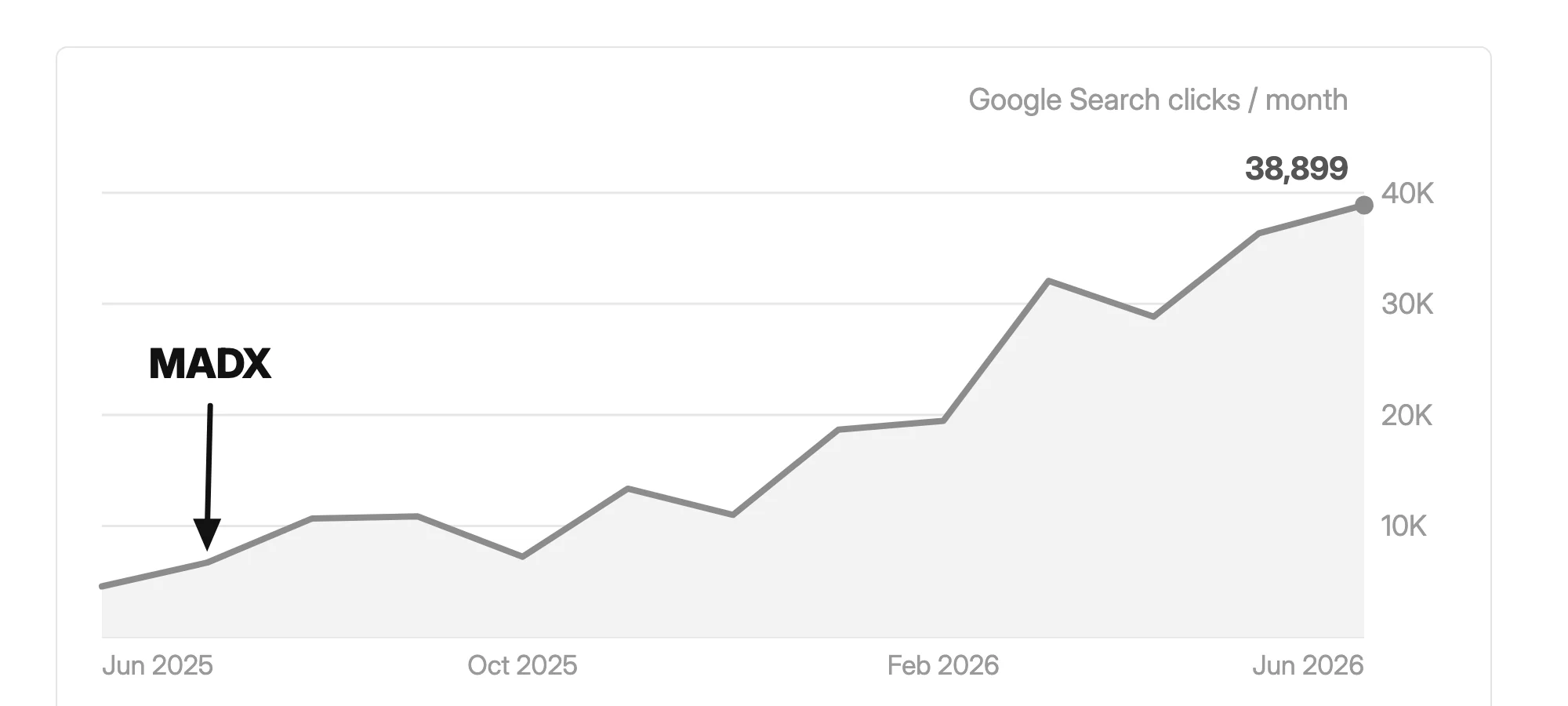
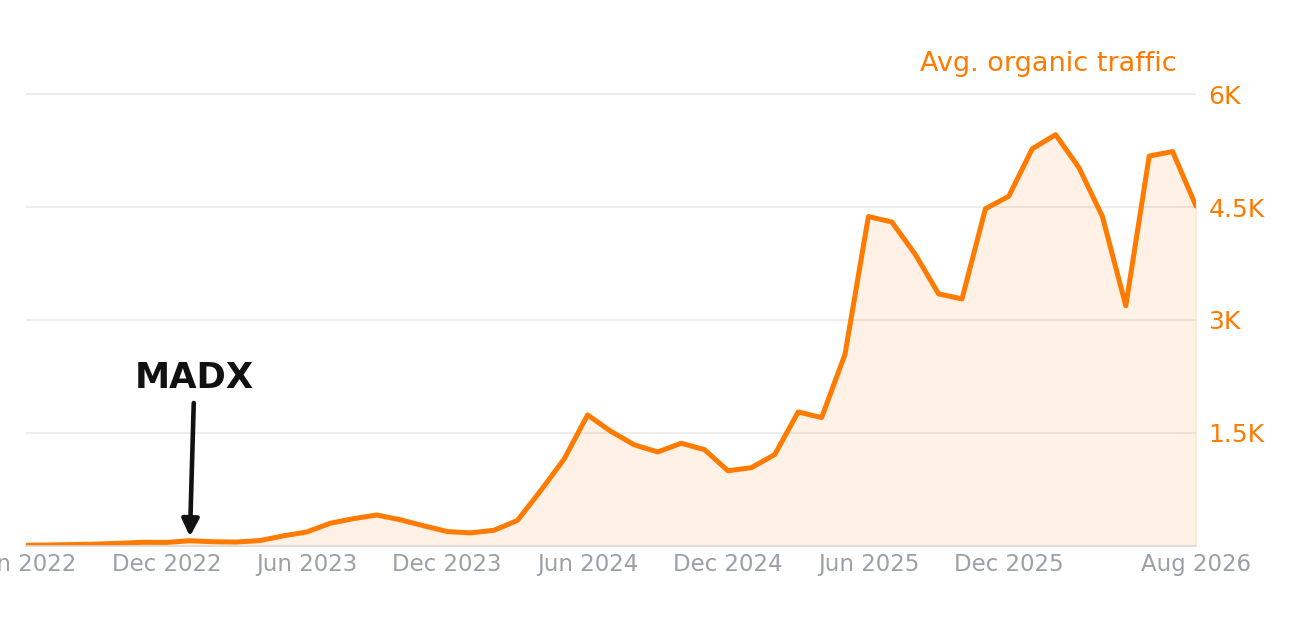
Meaningful organic traffic growth typically begins within 3 to 6 months of a well-run programme, with significant pipeline impact at 6 to 12 months. The first quarter establishes the technical foundation, content strategy and link pipeline, and compound growth builds from there. Postalytics, for example, grew organic traffic 16.8x in 12 months, from 4,916 to 82,505 monthly visits.
What does the first 3 months of SaaS SEO look like?
Month one is the audit, competitive analysis, keyword strategy and first technical fixes. Month two starts content production, on-page optimisation and link building outreach. Month three sets the publishing cadence, tracks early ranking movements and confirms the programme KPIs. You end the first quarter with a live, working SEO programme, not a strategy document waiting for budget. Our SEO methodology lays out the full process.
What results have you delivered for SaaS and fintech brands?
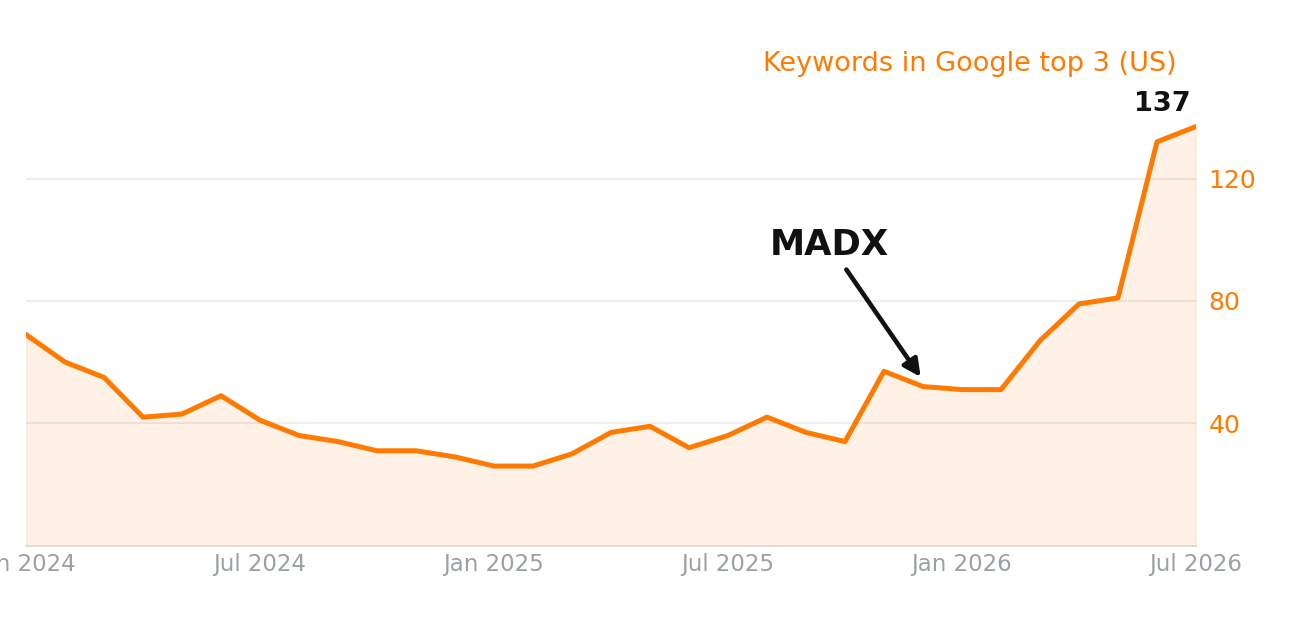
Postalytics grew organic traffic 16.8x in 12 months, page-one rankings from 1,305 to 14,676 and top-3 rankings from 273 to 3,672, which produced 20,000+ organic sign-ups. MoonPay grew organic traffic 175% to 433,317 monthly visitors and page-one rankings from 2,482 to 9,150. Read the Postalytics SaaS SEO case study and the MoonPay SEO case study.
How is SEO different from GEO, and do we need both?
SEO ranks your pages in Google's list of links; GEO gets your brand cited inside AI answers from ChatGPT, Perplexity and Google AI Overviews. You need both, because fewer searches end in a click: SparkToro found 68.01% of US Google searches ended without a click in the first four months of 2026. Every MADX plan includes GEO monitoring, and our SaaS GEO agency services go deeper on AI visibility.
Do we need SEO if we're already running paid search?
Yes, because they do different jobs. Paid search buys immediate, controllable traffic at a cost that scales with volume. SEO builds a channel that grows over time and lowers customer acquisition cost as it matures. The most efficient SaaS growth programmes use paid for immediate pipeline and SEO for compounding return.
Do you work with early-stage SaaS or only established brands?
Both, with different starting points. Early-stage SaaS usually starts with technical setup, a defined keyword strategy and long-tail, lower-competition content. Established brands often start with an audit to find what's underperforming before scaling what already works. We scope the plan to your baseline and stage.
How do you prioritise what to work on first?
We rank every task by impact and effort, and the highest-impact, lowest-effort fixes go first. Technical issues blocking indexation, achievable high-opportunity keywords and content gaps on pages that already have authority are typically the first 90 days' focus. We share the prioritised plan before any work begins.
How do you report on SEO performance?
Monthly reporting tracks leading indicators (rankings, crawl health, links built, AI prompt visibility) and lagging ones (organic traffic and organic-attributed leads). Growth and Scale add a real-time performance dashboard and conversion attribution, so you can see what's happening now and where the programme is heading.
How do I choose a SaaS SEO agency?
Choose the agency whose case studies look like your business and whose reporting ties to pipeline, not just traffic. Ask for published pricing and exactly what each tier ships, SaaS results with before and after numbers you can check, who will actually work on your account, and how they handle AI search alongside Google. Our comparison of SaaS SEO agencies walks through the main options, including when we're not the right pick.
Who will we work with day to day?
You work directly with senior MADX practitioners, not a rotating junior team. Authority gives you your own GEO Specialist; Growth adds a GEO Manager alongside the Specialist; Scale gives you a Manager plus a dedicated Specialist and weekly calls. Every plan includes a shared Slack channel, weekly progress updates and a monthly report with a review call.
When is MADX not the right SEO agency?
We're not a fit if you need guaranteed rankings (nobody can honestly promise them), if your budget is below $5,500 a month for ongoing work, or if you're pre product-market fit and can't yet name your buyer. Start with our free SaaS SEO and AI search audit instead, or book a call with our team to sense-check fit.