Content
Calculating...
Aug 2026
Best Enterprise Rank Tracking Software List - Compared
Enterprise rank tracking software eliminates inconsistent data and supports large SEO teams. Understand the tools that improve visibility and decision-making.

When you’re running SEO for a large site, tracking ranks quickly becomes more complex than checking a few keywords. You’re monitoring thousands of queries across markets, competitors, and constantly changing SERP features.
That’s where enterprise rank tracking software becomes essential. The right platform helps you manage keyword performance, monitor daily changes, and understand visibility across SERP features and Google AI Overviews.
Below, we compare the best enterprise rank tracking software to help you choose a platform that fits the scale and complexity of your SEO program.
What We'll Cover
TL;DR - List of Enterprise Rank Tracking Software
Before we go deeper into each platform, here’s a quick overview of the tools covered in this guide and the key capability that makes each one useful for large SEO teams:
| Tool Name | Key Feature |
|---|---|
| AccuRanker | Fast, on-demand rank updates for thousands of keywords with detailed SERP feature tracking. |
| SEOmnitor | Combines rank tracking with AI visibility tracking, forecasting, and ROI insights, built for enterprise reporting and decision-making. |
| Advanced Web Ranking (AWR) | Large-scale global tracking with hourly or on-demand updates across search engines. |
| STAT Search Analytics | Big-data SERP tracking for millions of keywords with API-first data delivery. |
| Nozzle | Flexible usage-based SERP tracking with deep local tracking and unlimited competitors. |
| seoClarity | Enterprise SEO platform with real-time rank intelligence and AI SERP tracking. |
| Conductor | Enterprise SEO platform with historical data, AI SERP tracking, and content workflow integration for large teams. |
| BrightEdge | Enterprise-grade tracking with blended rank visibility across SERP features and AI overviews, built for large global keyword portfolios. |
What is an Enterprise Rank Tracking Software?
Enterprise rank tracking software helps large SEO teams monitor how their site performs across thousands of keywords, markets, and competitors.
But rankings alone don’t tell the full story anymore. With SERP features and AI-generated results taking up more space, visibility now shows up in different ways. You might rank well and still miss attention, or appear in AI results without a top position.
That’s why these tools are important. They help you understand where your brand is actually visible and how that changes over time.
For enterprise teams, that clarity makes it easier to decide what to optimise next and where the real opportunities are.

What Makes Enterprise Rank Tracking Different from Standard Rank Tracking?
If you’ve ever used a basic rank tracker, you know it works well for small keyword sets. But once you’re managing SEO for a large site, the requirements change quickly. Enterprise teams need deeper insights, larger keyword coverage, and more reliable data.
Here’s how enterprise rank tracking differs from standard tools:
| Feature | Standard Rank Tracking | Enterprise Rank Tracking |
|---|---|---|
| Keyword Coverage | Tracks a limited set of keywords | Handles thousands of keywords across markets and devices |
| Update Frequency | Weekly or scheduled updates | Daily rank tracking and on-demand rank updates |
| SERP Analysis | Focuses on simple position tracking | Includes SERP feature tracking and competitor visibility |
| Search Visibility Metrics | Shows individual keyword positions in isolation | Measures overall visibility using metrics like share of voice across entire keyword sets |
| AI and SERP Changes | Focuses mainly on traditional blue-link rankings | Tracks visibility across AI-driven results like Google AI Overviews and evolving SERP features |
| Scalability | Suitable mainly for small websites or campaigns | Designed for large sites, multi-market SEO, and enterprise SERP tracking |
List of Best Enterprise Rank Tracking Software to Compare
Once you understand how enterprise rank tracking differs from standard tracking, the next step is choosing a platform that can actually support that level of complexity.
Below are some of the best enterprise rank tracking software options that large SEO teams commonly use:
AccuRanker
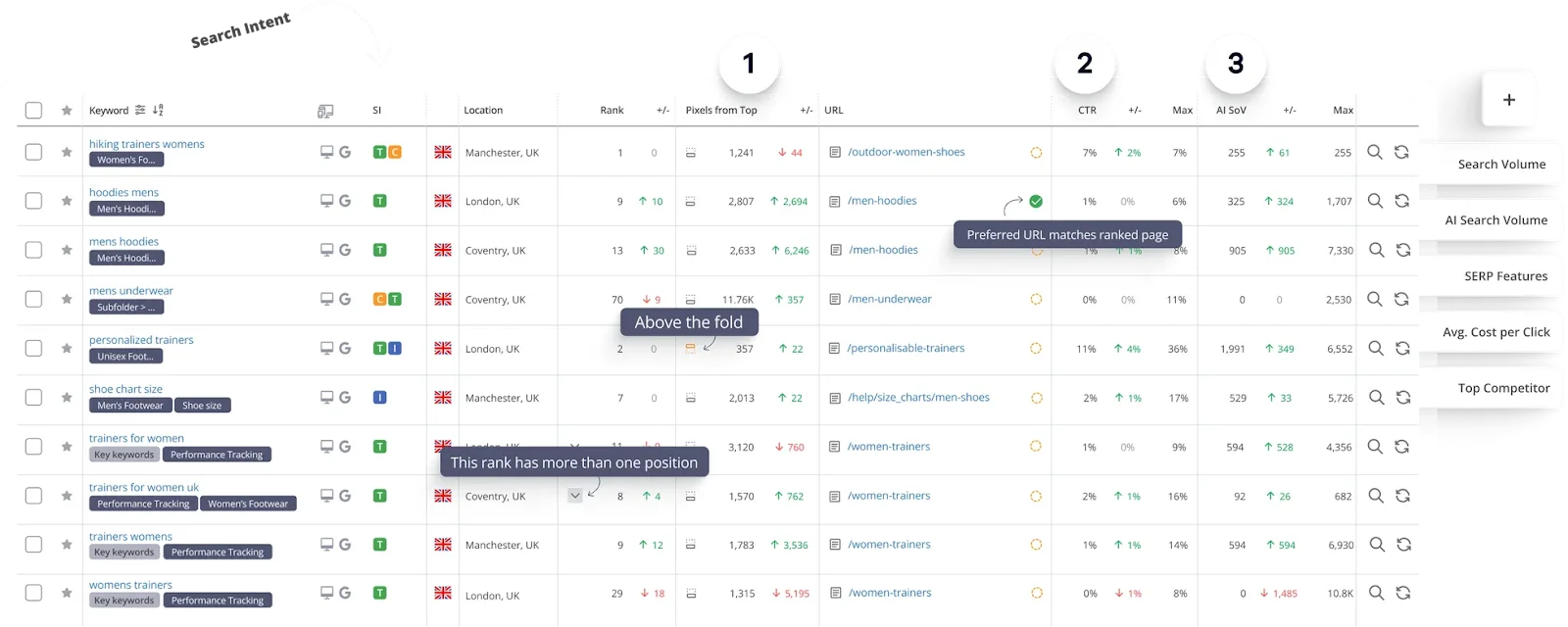
AccuRanker is built for teams that need fast and reliable enterprise rank tracking. You can refresh rankings on demand for thousands of keywords and get updated data within seconds.
The platform also supports share of voice tracking, SERP feature monitoring, and advanced keyword tagging, making it easier to analyse performance across funnel stages. With a lot of users and strong API integrations, it is a perfect tool for large SEO teams that depend on custom reporting and BI workflows.
If you're considering AccuRanker, read our AccuRanker review guide, which discusses the tool’s features and pricing in detail.
SEOmonitor
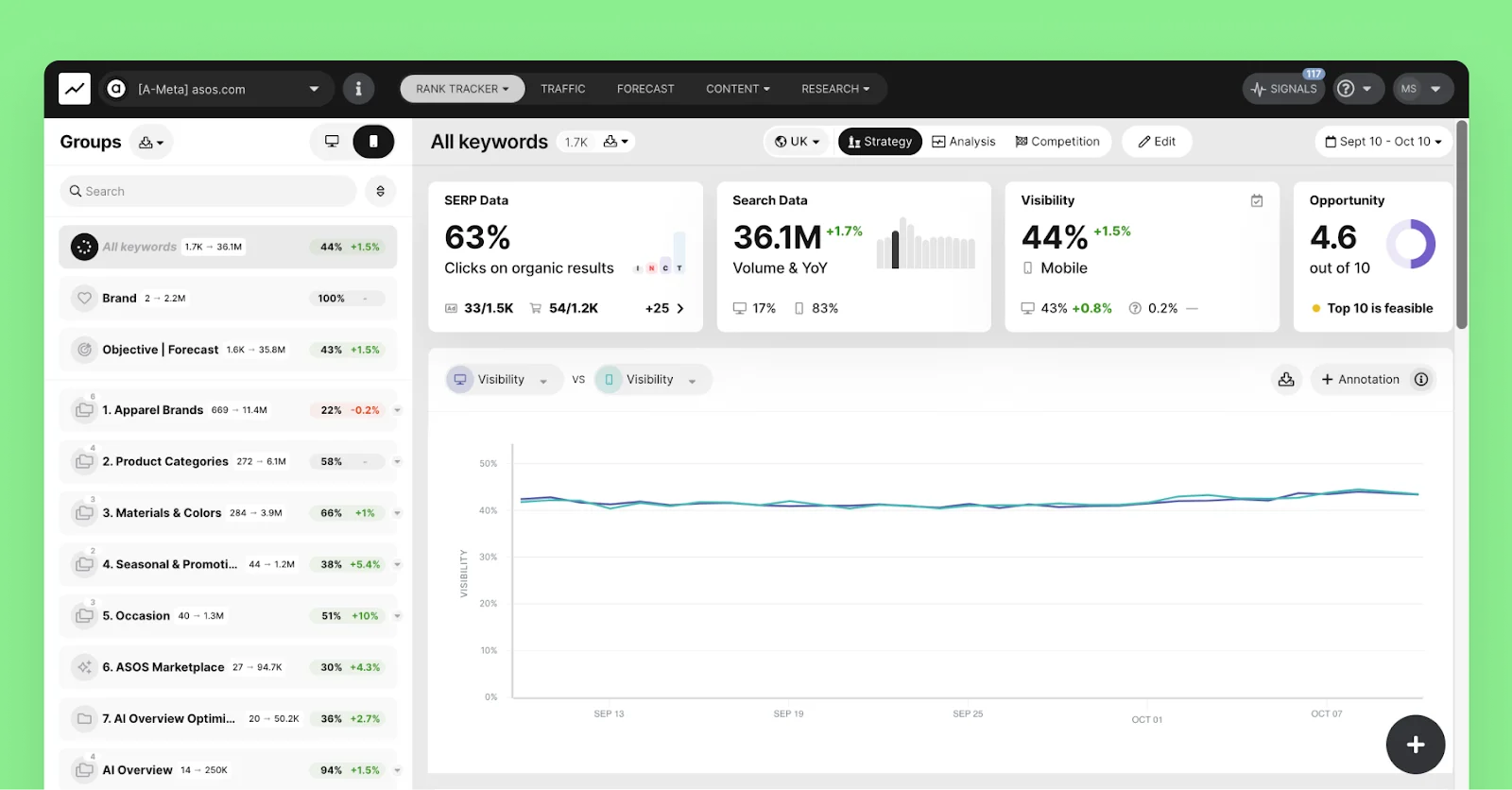
SEOmonitor is useful if you want to go beyond basic rank tracking and actually understand what those rankings mean for your business. It tracks traditional positions alongside Google AI Overviews and AI search platforms, so you get a clearer picture of how your brand shows up in modern SERPs.
You also get daily rank tracking, forecasting models, and performance insights that help you connect rankings with traffic and CTR. This is especially helpful if you're reporting to leadership or trying to predict the impact of SEO changes.
The tool works well for enterprises as it combines visibility tracking with forecasting and ROI insights, which make it easier for SEO teams to justify budgets and plan ahead.
Advanced Web Ranking (AWR)
.webp)
Advanced Web Ranking tracks thousands of keywords across search engines and locations, with the option for on-demand updates when you need more updated data. The tool also tracks SERP features and AI responses, which helps you understand how search results change across markets.
With unlimited projects, integrations with tools like ‘Looker Studio’ and ‘BigQuery,’ and flexible reporting options, AWR works well for enterprise teams that want to manage international SEO programs.
STAT Search Analytics
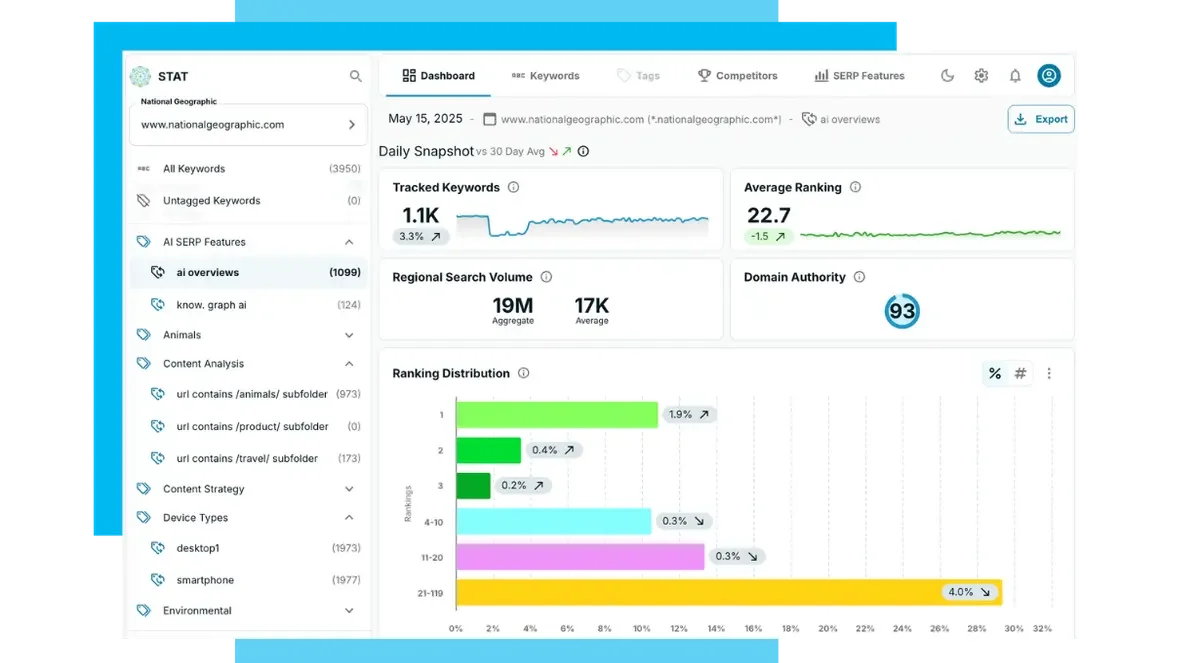
STAT is designed for teams handling large-scale SERP data. It can track millions of keywords daily and deliver ranking data through APIs, making it easy to plug directly into BI tools like BigQuery or Redshift.
Enterprise teams often use STAT for deep SERP analysis, including mobile and city-level tracking, unlimited competitor monitoring, and visibility across features like AI Overviews. If your organisation relies heavily on data pipelines and large keyword sets, STAT works well as a central source of ranking data.
Nozzle
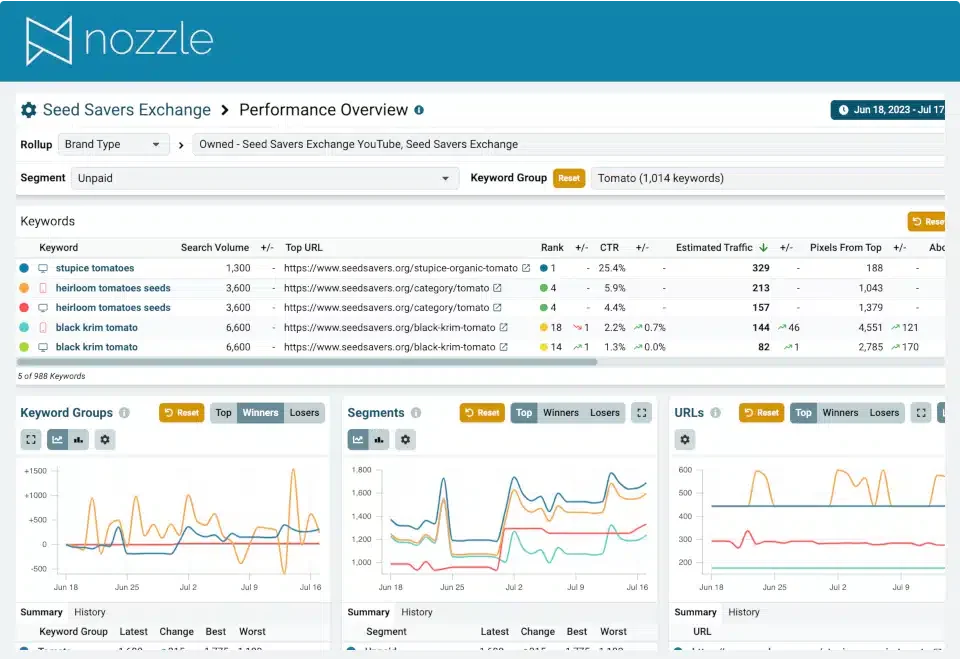
Nozzle takes a flexible approach to enterprise SERP tracking by charging based on data usage rather than keyword limits. This allows teams to track large keyword sets without worrying about strict caps.
It supports detailed local tracking down to zip-code level and lets you analyse rankings across unlimited competitors. With full API access and integrations with tools like BigQuery, Nozzle is well-suited for enterprises that prefer building custom reporting or data models around their ranking data.
seoClarity
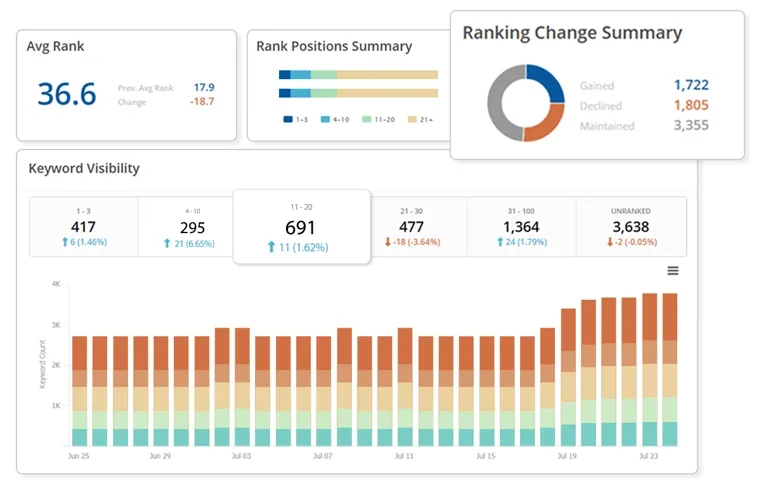
seoClarity works well if you're managing SEO across multiple teams, markets, or domains and need everything in one place. It offers daily or hourly rank updates, tracks AI Overviews and SERP features, and gives you detailed control over how you organise your data.
You can segment keywords by product lines, regions, or business units, which makes it easier to manage large SEO programs without losing clarity. It also integrates with BI tools and supports intent clustering, so your team can turn ranking data into more structured decisions.
For enterprise teams, the value comes from its scalability and organisation. It helps you manage complex SEO operations while keeping reporting and decision-making consistent.
Conductor
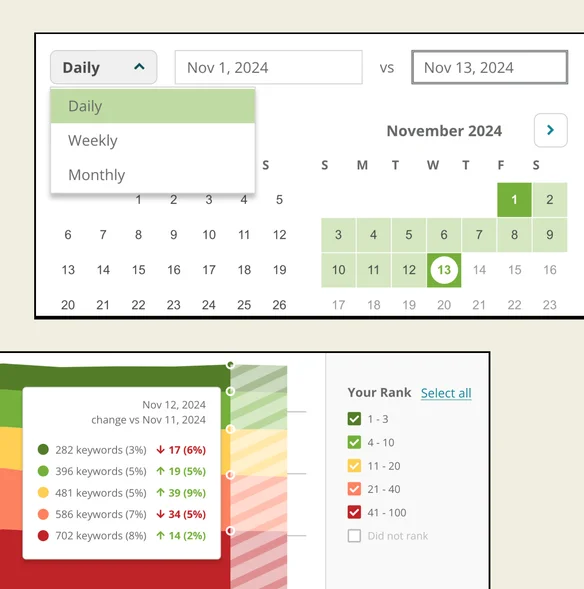
Conductor focuses on combining rank tracking with strategic insights. When you set up the platform, it immediately provides access to historical ranking data, helping you analyse trends without waiting months to build benchmarks.
It tracks rankings across locations and devices while also monitoring AI-driven SERP features. Conductor also connects ranking insights with content workflows and cannibalisation detection, which makes it helpful for large organisations managing SEO across multiple teams.
Curious how it compares with other enterprise SEO platforms? Take a look at our Conductor review guide for a deeper breakdown.
BrightEdge
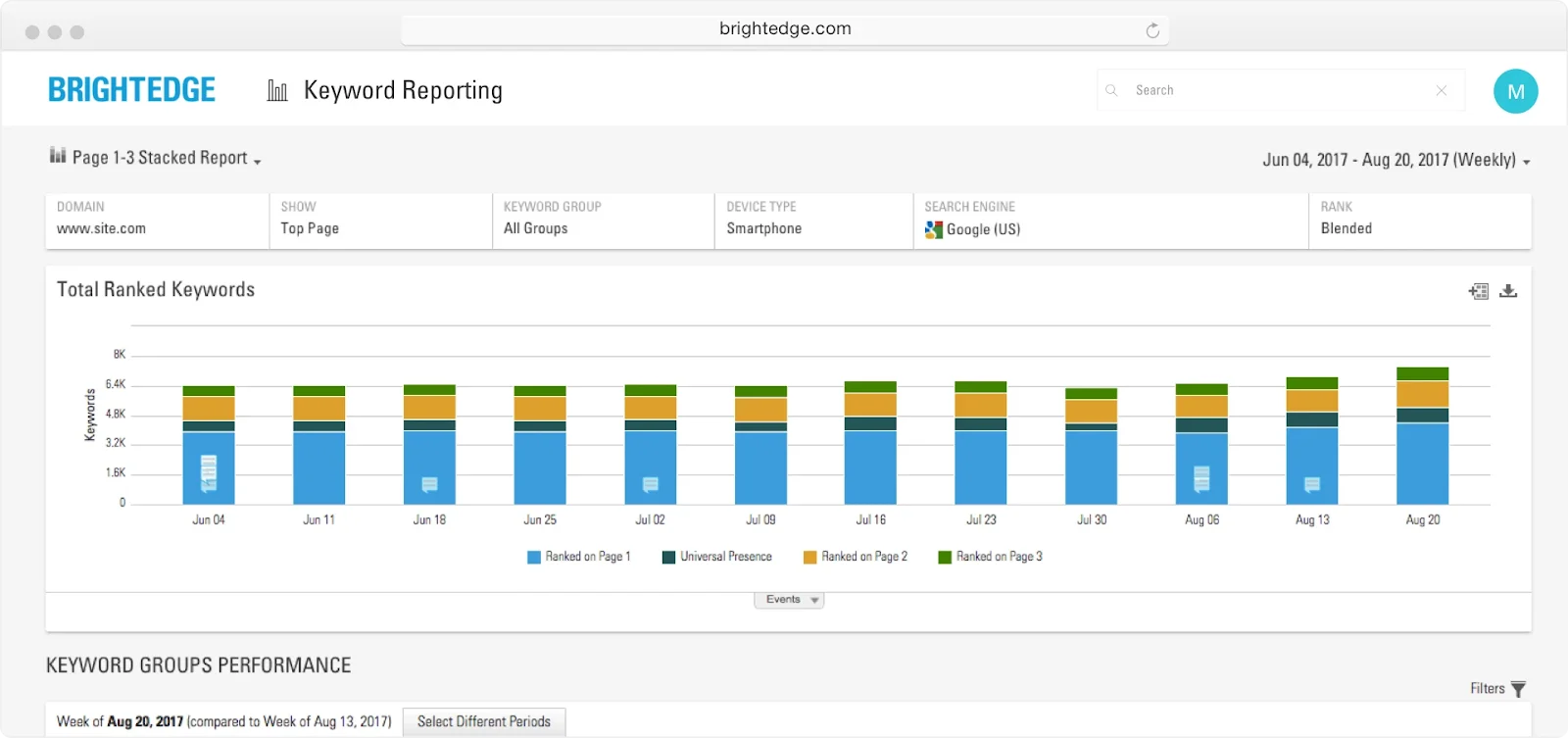
BrightEdge is designed for enterprise organizations that have large keyword portfolios and need global monitoring. Its Daily Rankings feature tracks ranking changes across devices, locations, and search engines while sending alerts when high-value keywords move.
It also helps you see the full picture of your search visibility. This includes not just your position in standard results, but also how you appear across elements like images, videos, local packs, and AI Overviews.
If BrightEdge is on your shortlist, our BrightEdge review guide explains its core capabilities and how it stacks up against other enterprise SEO tools.
Rank tracking tools can show you what’s happening in the SERP. The harder part is deciding what to fix, build, or prioritise next, especially on large SaaS websites with complex structures and multiple teams.
These tools can give you strong visibility into rankings and SERPs. But without the right strategy behind them, it’s easy to end up with data and no clear direction. That’s where working with an experienced team makes the difference.
At MADX Digital, we work with enterprise SaaS teams to turn SEO into a structured growth channel by combining technical SEO, content systems, digital PR, and AI search (GEO) into a single integrated strategy.
As a starting point, we offer a free AI SEO & GEO audit that is hand-built by strategists and delivered within 48 hours. It shows you missed high-intent demand, competitor gaps, and where you’re losing visibility in search and AI.
Request your free SEO & GEO Audit Report to get a tailored analysis of your search opportunity.
How to Choose Enterprise Rank Tracking Software
Not every rank tracking tool is built for enterprise SEO. If your team is monitoring thousands of keywords across markets and SERP features, the platform you choose needs to support scale, accuracy, and collaboration.
As you compare different enterprise SEO tools, here are a few questions you should ask vendors:
- Can It Handle Enterprise-Scale Keyword Tracking? The platform should be able to comfortably track thousands of keywords across devices, locations, and markets without data limits.
- How Reliable and Fresh Is the Ranking Data? Look for tools that support daily rank tracking and on-demand rank updates, so your team can quickly investigate ranking shifts.
- Does It Track Modern SERP Features and AI Visibility? With search evolving, the tool should monitor SERP features, Google AI Overviews, and broader AI visibility signals, along with traditional blue-link rankings.
- Can You Analyze Competitor Visibility Easily? The tool should offer features such as share of voice and enterprise SERP tracking to help you understand how your site's presence compares to competitors within the same keyword set.
- Will the Platform Scale with Your SEO Program? As your keyword list grows, the tool should continue to support large datasets, custom reporting, and team collaboration.
How to Measure SEO Performance for Business Growth?
To understand if your enterprise SEO strategy is working, you need to look beyond rankings and check the signals that reflect real search visibility.
Here are a few common enterprise SEO analytics that you should track:
- Keyword Rank Tracking: Monitor where your pages appear for important queries. Consistent changes in rankings generally show stronger search visibility.
- Share of Voice: Measure how often your brand appears across a set of keywords compared to competitors. This helps you understand your website’s presence in the SERP.
- SERP Visibility: Track if your content appears in elements like featured snippets, image packs, or Google AI Overviews, which have a major influence on user attention.
- AI Rank Tracking: Track whether your content appears in AI-generated results like Google AI Overviews or answer engines. This helps you understand if your brand is being surfaced in AI-driven search.
- Conversion Signals: Finally, connect ranking data with organic traffic, demo requests, or sign-ups to see which keywords are actually contributing to business growth.
Turn Rank Tracking Data Into Clear Enterprise SEO Strategies
Enterprise rank tracking tools generate a lot of data. The real value comes from how your team uses that data to guide SEO decisions.
When you’re monitoring thousands of keywords, it becomes easier to spot patterns: which competitors are gaining share of voice, which SERP features are taking visibility, and where rankings are shifting across markets.
The right platform gives you visibility into rankings and AI signals, but turning that data into clear actions requires the right strategy behind it.
At MADX Digital, we help companies build enterprise SEO systems that turn search visibility into long-term, consistent growth.
If you want to improve how you measure and scale organic performance, speak with our team and explore how enterprise SEO can support your next stage of growth.
Frequently Asked Questions (FAQs)
Now, let’s look at some common questions about enterprise rank tracking tools:
How Do AI Overviews Affect Traditional Rank Tracking?
AI overviews change how rankings translate into visibility. Google now places AI-generated summaries above the traditional blue links, which means users often see the AI answer before they see your page.
Because of that, a #1 keyword rank tracking position doesn’t always guarantee traffic anymore. What matters just as much is whether your content appears as a citation inside the AI summary.
How Often Should Enterprise Rank Data Be Refreshed?
Large websites track multiple keywords across markets, and rankings can change quickly when competitors publish new pages or there are algorithm updates. Daily updates help you spot drops early and respond before they affect traffic.
Weekly updates can work for long-term trend monitoring, but competitive industries usually rely on enterprise SERP tracking with daily updates and the option for on-demand rank updates when investigating sudden changes.
What is the Average Cost of Enterprise Rank Tracking Software?
Enterprise-grade rank-tracking software usually costs $500 to $5,000 per month. Pricing depends on factors such as keyword volume, user count, tracking frequency, and integrations (e.g., APIs or BI tools).
Most enterprise platforms, like AccuRanker, seoClarity, and Conductor, use custom pricing, especially when you’re tracking 25,000+ keywords or need advanced reporting and data access.

Latest articles
What we've published in the past 30 days — across SEO, GEO, content, and digital PR.
.png)