GEO
Calculating...
Sep 2026
25+ Buyer Queries for AI Prompts & SEO Keyword Tracking
Most teams track AI visibility too broadly. Start with the queries and prompts that buyers use when they are close to choosing software.

Most teams track visibility in both Traditional SEO and AI Search far too broadly.
They track rankings, brand mentions, citations, and whether they appear in ChatGPT, Perplexity, Gemini, Claude, or Google AI Overviews.
That data is helpful & useful for sure. But it can also make visibility look stronger than it really is.
Not every keyword or prompt has the same commercial value to your business.
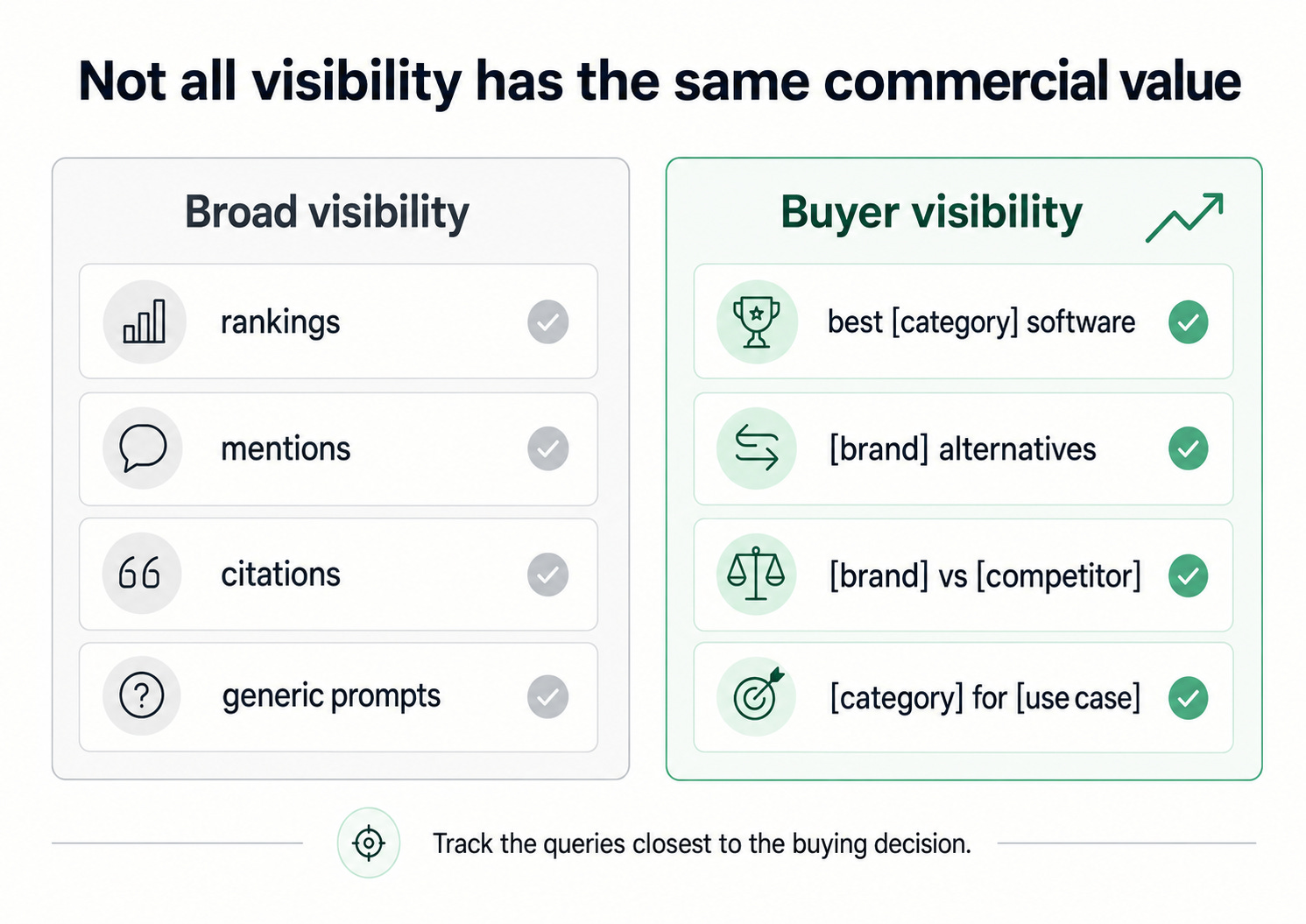
A citation for a broad educational query is not the same as a search where someone is actively comparing software options and your brand is recommended.
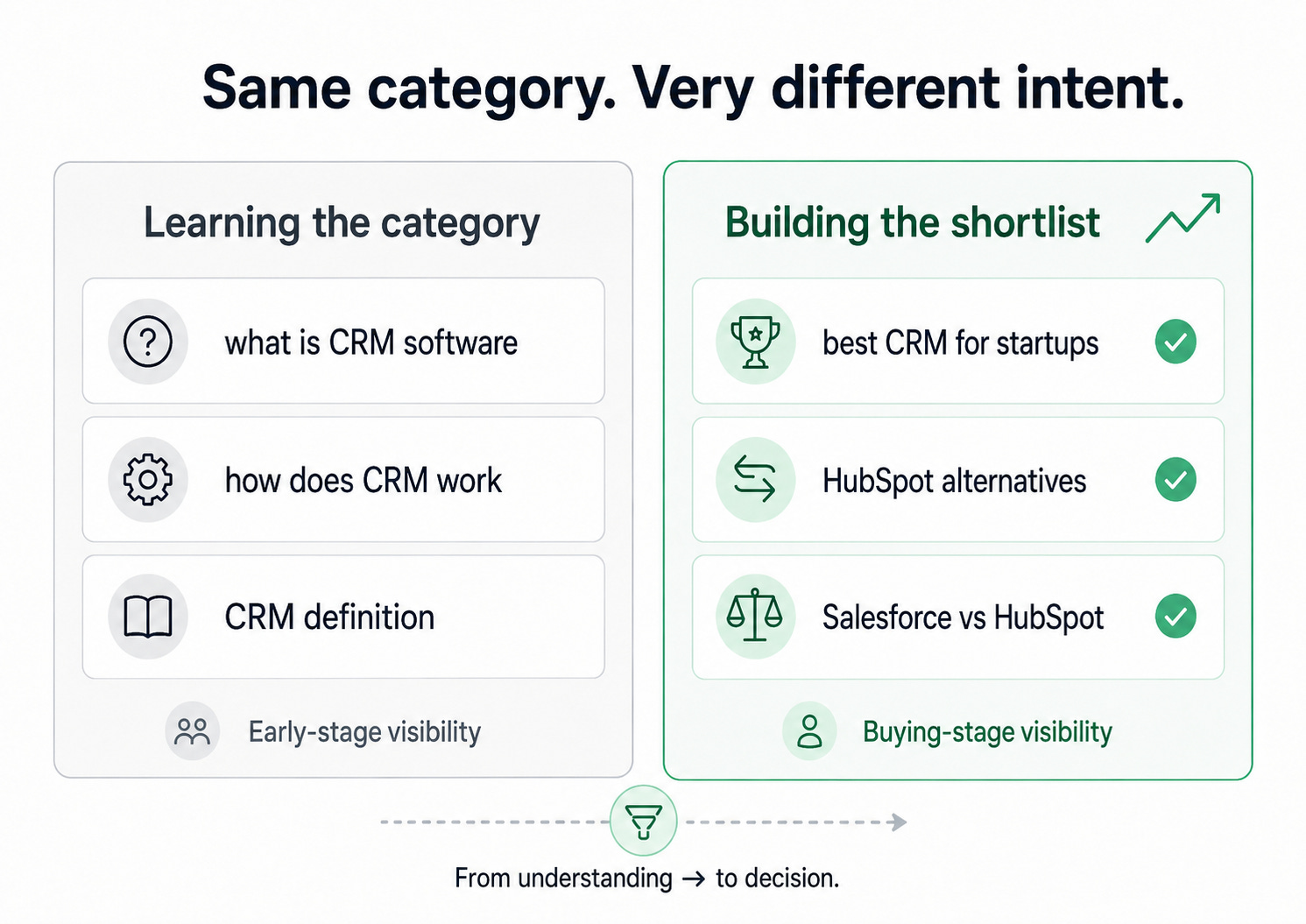
Ranking for “what is CRM software” is not the same as being visible for “best CRM for startups” or “HubSpot alternatives.”
One query suggests someone is learning the category. The other suggests someone is building a shortlist.
The goal should not be to track every possible query. The goal is to track the searches and prompts that sit closest to the buying decision.
What are buyer queries?
Buyer queries are the searches and prompts people use when they are deciding which product to consider, compare, shortlist, or book a call with.
They are not basic education searches like:
what is CRM software
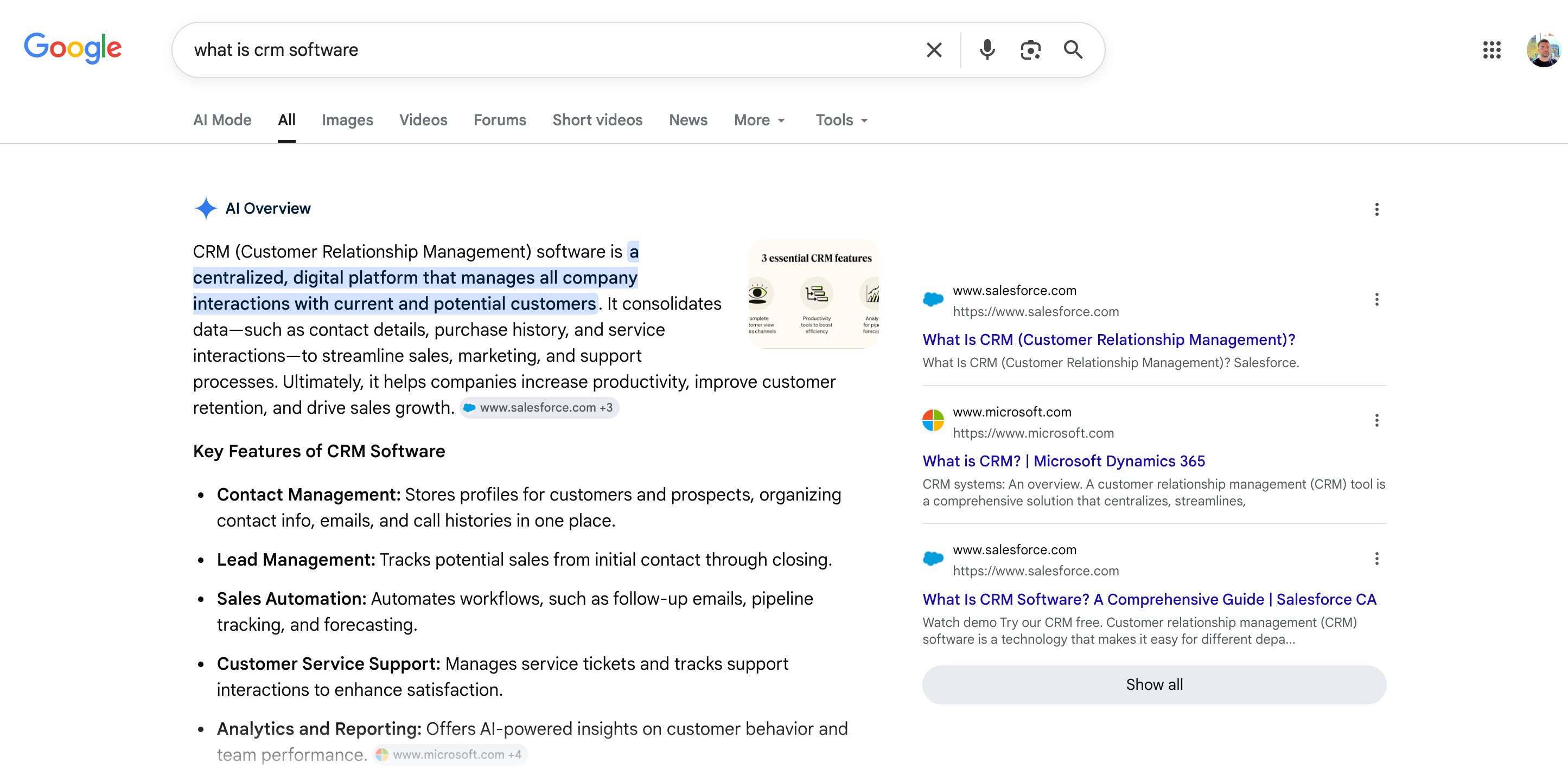
That search may still have value, but it usually sits earlier in the journey.
Buyer queries look more like:
best CRM softwareHubSpot alternativesSalesforce vs HubSpotproject management software for remote teamshelp desk tools with AI chatbot
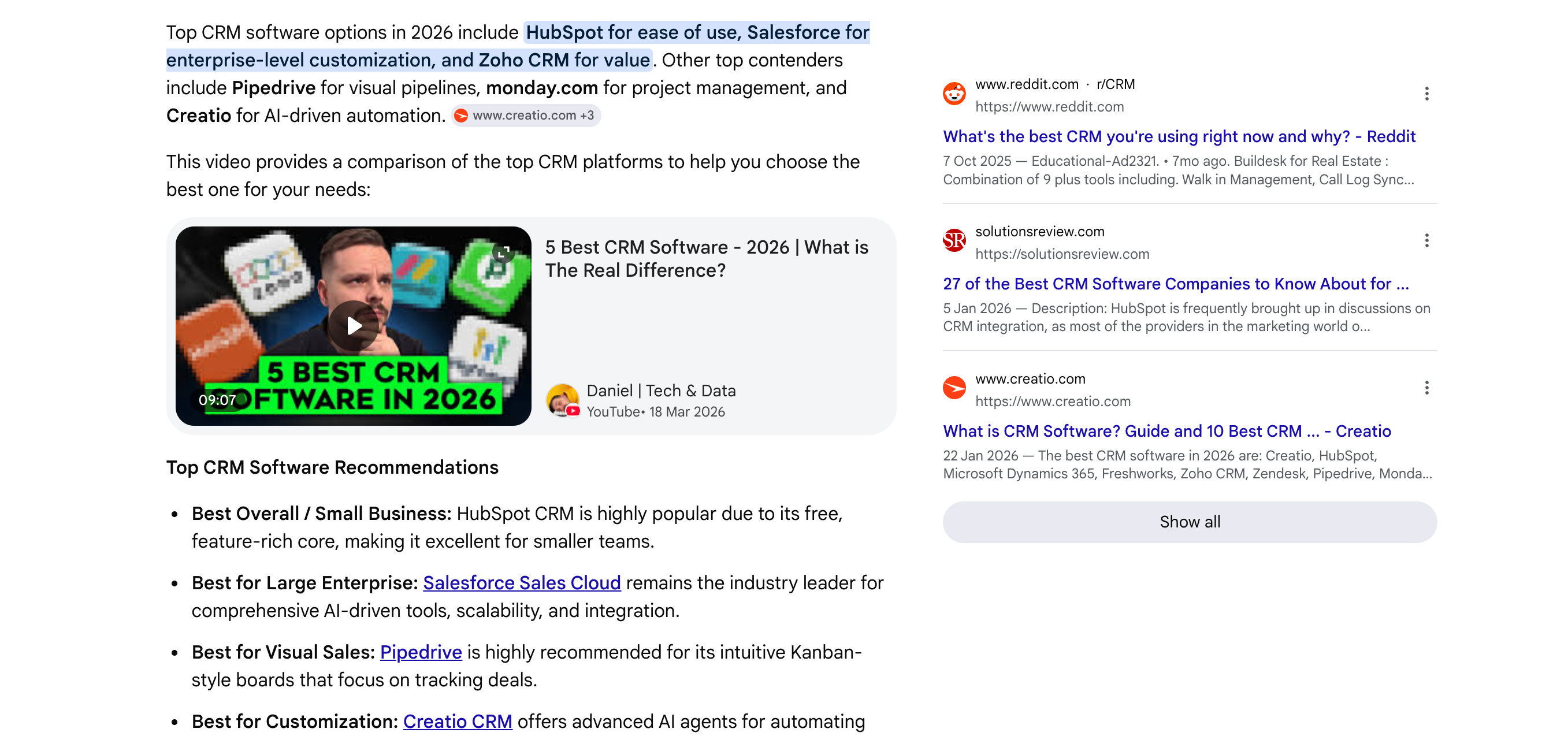
The difference is intent.
Someone searching for a definition is trying to understand the category. Someone searching for the best tools, alternatives, comparisons, use cases, pricing, or reviews is trying to understand the market.
They are asking:
- Which brands should we consider?
- Which ones look credible?
- Which products fit our situation?
- Which vendors are worth speaking to?
Depending on the deal size, these searches might come from a founder, department lead, internal champion, procurement team, operator, or C-suite buyer validating a shortlist. The person searching is not always the final decision maker, but they often shape which vendors make it into consideration.
That is why buyer queries matter more than broad visibility.
They sit closer to the point where research turns into consideration.
Why these queries matter now
A few years ago, buyer-query tracking was mostly a Google SEO problem.
Someone searched “best project management tools,” clicked a listicle, scanned the options, and maybe clicked through to a few vendor websites.
That still happens.
But the same behaviour is now spread across more tools and platforms.
A buyer might ask ChatGPT for the best tools in a category, see five recommended brands, then Google one of those brands later.
Or they might search Google, see an AI Overview, click a cited buyer guide, read a review site, and return through direct, branded organic or branded PPC.
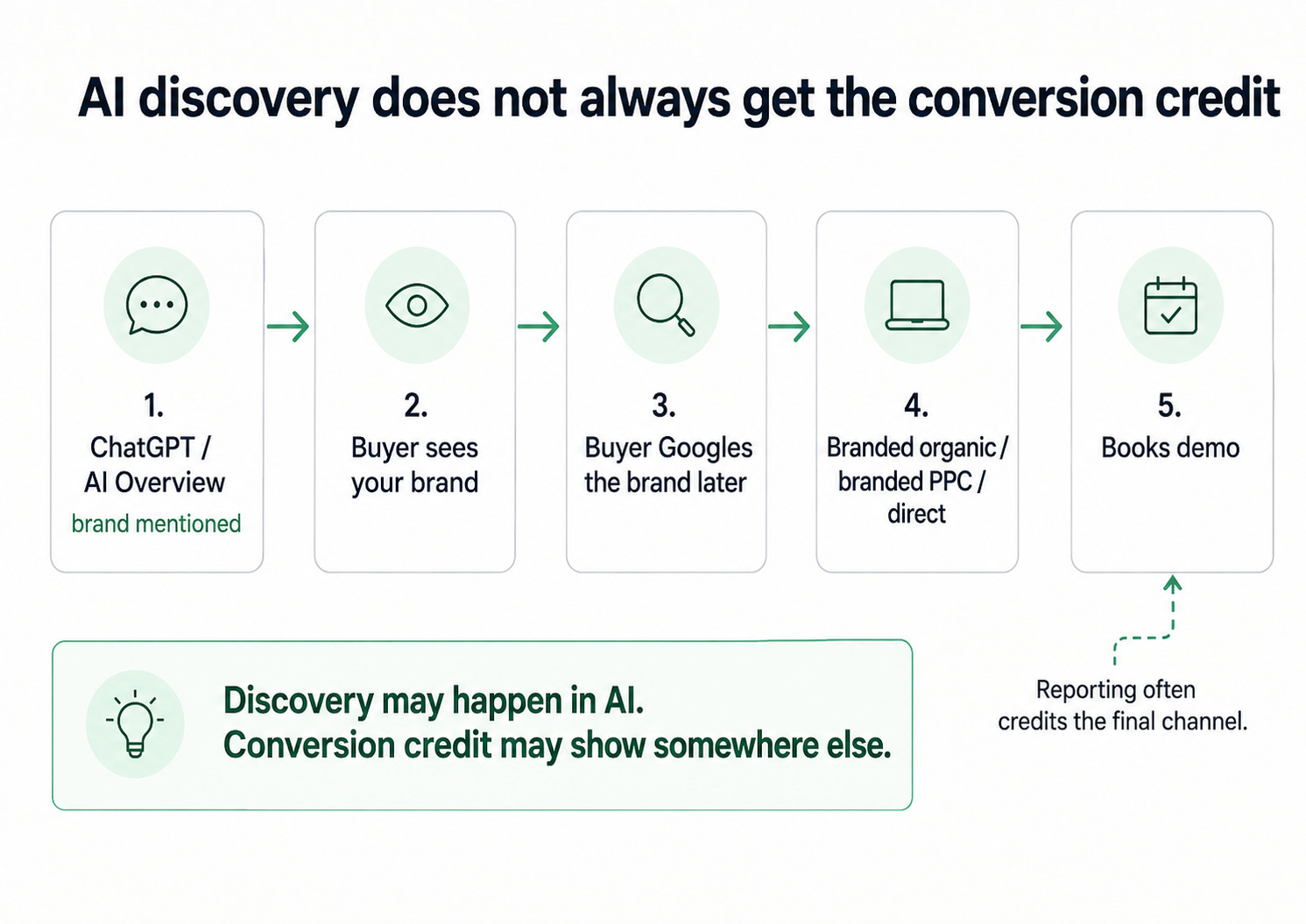
The buyer journey still happened. But your reporting may not show it as cleanly.
When it comes to being discovered in AI, a mention for “what is project management software” is not the same as a recommendation for a “best project management software for agencies.”
Appearing on a broad informational answer is not the same as being included in a shortlisted comparison prompt.
If you do not separate those, your visibility report can look stronger than reality and will not sync up with your conversion reporting.
The buyer query set I’d track
If I were building a buyer-query tracking set for a SaaS company, I would start with the categories below.
You can copy these into a sheet, Ahrefs, another SEO tracking tool, or an AI visibility tracker.
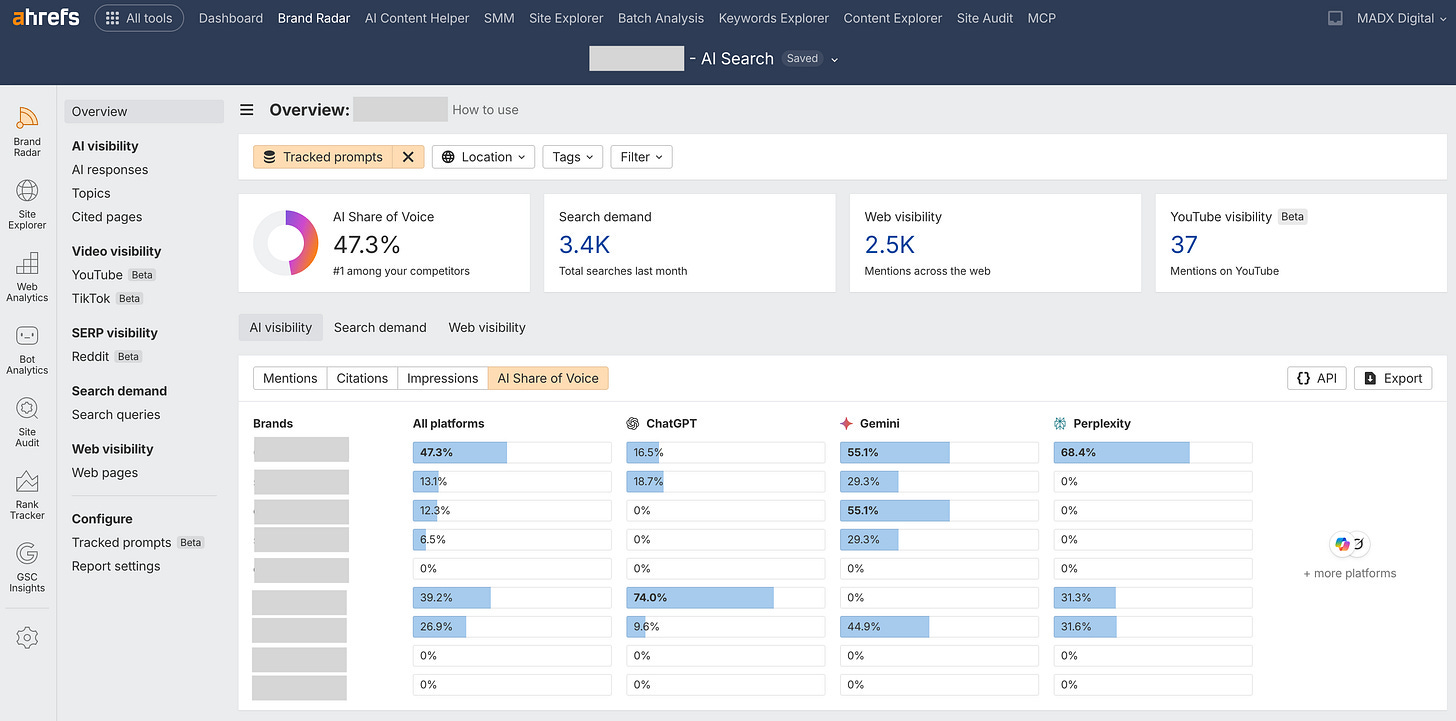
The point is not to track every possible variation but to create a focused set of buying-stage queries that you can review consistently.
Replace the brackets with your category, brand, competitors, features, industries, use cases, and customer segments.
I’d split the query set into two groups:
- core buyer queries
- advanced buyer queries
The core set is where most teams should start.
The advanced set is useful once you already understand the main category, alternatives, comparison, and feature patterns.
Core buyer queries
For AI tools, if you have extra credits, I would also turn each keyword into an additional natural-language prompt with suffixes for ICPs.
So:
best CRM software
becomes:
What are the best CRM software options for a B2B SaaS company?
And:
CRM software with SOC 2 compliance
becomes:
Which CRM platforms have strong security and SOC 2 compliance for a growing SaaS company?
You do not need the prompt to be clever.
You just need it to reflect how a real buyer would ask the question.
Advanced buyer queries
Once you have the core set running, I’d add a second layer of queries around risk, fit, switching, and later-stage validation.
There are more query types you could add later, like regional searches, procurement searches, ROI searches, stack-fit searches, market leader searches, and open-source alternatives.
But I would not start there unless they are clearly relevant to your category.
The mistake is making the tracker so large that nobody keeps it updated.
For most companies, 30 to 50 focused queries is enough to see useful patterns.
How I’d track them
I would not overcomplicate this at the start.
A simple sheet is enough. But if you have the budget you can use Ahrefs Brand Radar to do the same (or ask your SEO agency to set it up for you).
I’d track three things.
1. Visibility
Do you appear for the query or prompt?
Which competitors appear? (and whats your position)
Where do you appear in the answer or result set?
This is the simplest layer, but it is still useful. If your competitors keep appearing for alternatives, comparison, and feature prompts while you are missing, that is a commercial visibility gap.
2. Source influence
Which sources are shaping the answer?
Are AI answers citing vendor pages, review sites, third-party listicles, Reddit, YouTube, documentation, comparison pages, or editorial sites?
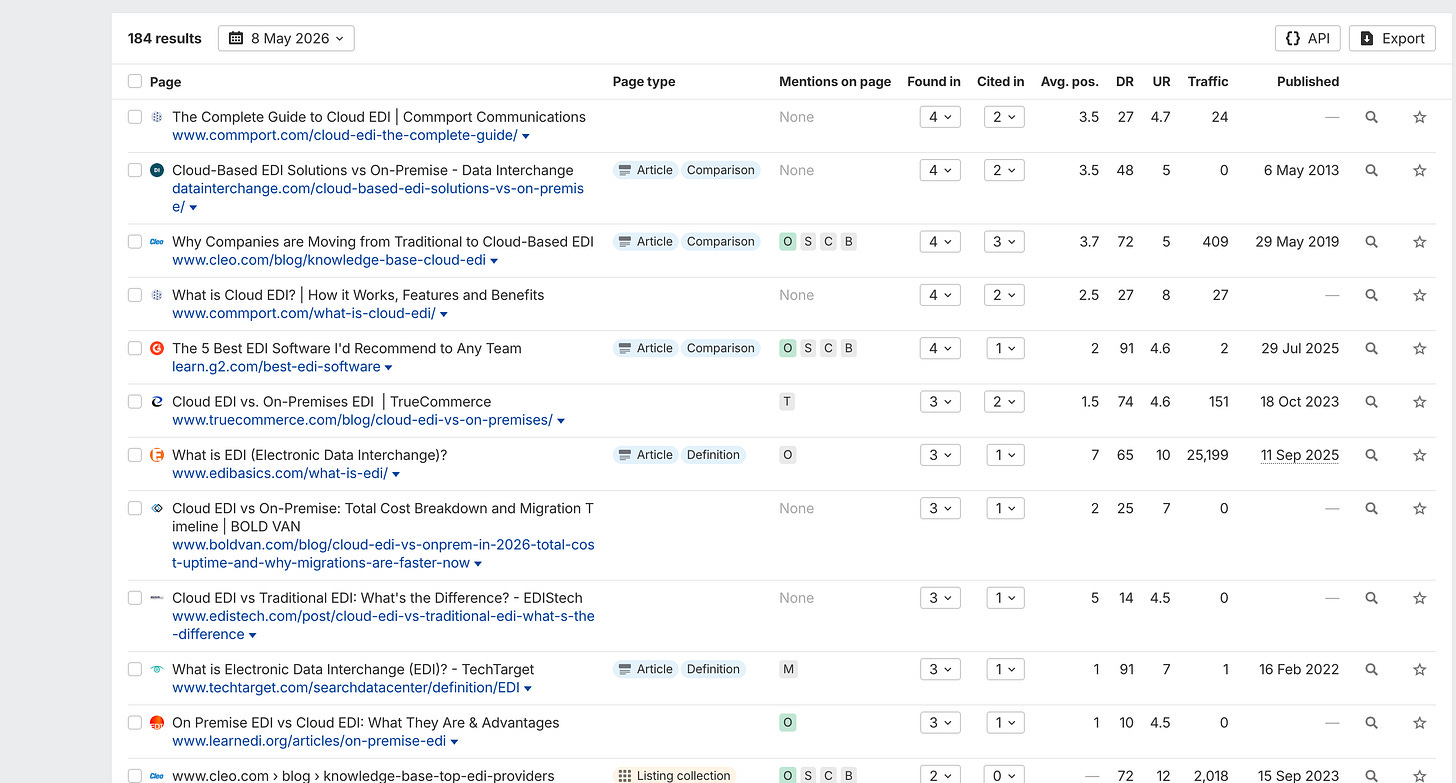
This matters because AI visibility is often shaped by sources outside your own website.
If a third-party listicle keeps getting cited and your competitors are listed there but you are not, that is not just a content problem.
It is a visibility problem.
3. Link and attribution clues
Does the brand get a direct website link?
Is it only mentioned?
Does the click go to a citation source, another Google search, or nowhere obvious?
This is easy to miss, but it matters.
If the brand is mentioned but the link does not go to the brand website, the influence may still exist, but the click path changes. That can affect how the journey shows up in Search Console, GA4, and paid search reporting.
For each query, I’d also record the date, device, location, signed-in state, and a screenshot.
Not because screenshots are exciting.
Because AI answers and AI Overviews change often, and you need evidence of what was visible at the time.
The patterns I’d look for
One query result does not tell you much.
The pattern does.
After a few weeks (to months) of tracking, I’d look for these questions:
- Are we visible for category searches but missing from comparison prompts?
- Do competitors appear more often in alternatives searches?
- Are AI answers citing third-party pages that do not mention us?
- Are we ranking in Google but missing from AI answers?
- Is branded search or branded PPC moving after visibility improves?
That is where this becomes useful.
Not because it gives perfect attribution. It will not.
But it gives you a clearer view of buying-stage visibility.
SEO keywords show where you rank.
AI prompts show where you are recommended, cited, or missing.
Looking at both together gives you a better view of whether buyers are actually seeing you before they decide who to research next.
The honest limitation
This will not prove that one AI Overview mention created one branded search, one PPC click, or one demo request.
Attribution is not that clean.
A buyer might see your brand in an AI answer, remember the name, search for you later, click a branded PPC ad, read reviews, come back direct, and then convert.
The final report may credit paid search or direct, even if the first discovery happened somewhere else.
That is why I would treat this as visibility and influence tracking, not perfect attribution.
You are looking for directional evidence:
- Are we appearing for the prompts and keywords that shape shortlists?
- Are competitors appearing more often than us?
- Which sources are repeatedly cited?
- Are important third-party pages missing our brand?
- Is branded demand moving after visibility improves?
That is not perfect.
But it is much better than only reporting traffic, rankings, or generic AI mentions.
The takeaway
Most teams do not need more prompts to track.
They need better prompts to track.
Start with the buyer queries closest to revenue: category, alternatives, comparisons, use cases, features, pricing, reviews, compliance, implementation, and switching.
Then track those same buying moments across Google, AI Overviews, ChatGPT, Perplexity, Gemini, Claude, and your SEO tool.
The goal is not to prove every AI mention caused a conversion.
The goal is to know whether your brand appears when buyers are building the shortlist.
That is the visibility worth tracking.
Once you have your prompt set, score it as AI share of voice to see where you win and lose.
Frequently Asked Questions
What are buyer queries in SEO and AI search?
Buyer queries are the searches and prompts people use when they are close to choosing, comparing, or shortlisting a product.
They usually include terms like “best,” “alternatives,” “vs,” “pricing,” “reviews,” “for [use case],” or “with [feature].” These queries matter because they show commercial intent. Someone searching “what is CRM software” is still learning the category. Someone searching “best CRM for startups” or “HubSpot alternatives” is much closer to deciding which tools to evaluate.
For AI retrieval, buyer queries help show whether your brand appears when tools like ChatGPT, Perplexity, Gemini, Claude, and Google AI Overviews are shaping a buyer’s shortlist.
Why are buyer queries more important than broad visibility?
Buyer queries are more important because they sit closer to revenue.
Broad visibility can make performance look stronger than it really is. A brand mention for an educational prompt does not carry the same commercial value as being recommended in a comparison or alternative search. For example, appearing for “what is project management software” is useful, but appearing for “best project management software for agencies” is more likely to influence vendor consideration.
For AI search tracking, this distinction matters. AI answers can mention or cite brands across many topics, but the visibility that matters most is whether your brand appears when buyers are actively comparing options.
How do you track buyer queries across Google and AI search?
Track buyer queries by creating a focused list of high intent keywords and prompts, then reviewing visibility, competitors, cited sources, and attribution clues across Google and AI tools.
A simple starting point is 30 to 50 queries across categories like:
category searches, alternatives, comparisons, use cases, features, pricing, reviews, compliance, implementation, and switching.
For each query, record whether your brand appears, which competitors appear, where the answer links, which sources are cited, and whether the brand gets a direct website link. Also record the date, device, location, signed in state, and screenshots, because AI answers and AI Overviews change often.
This gives you a clearer view of whether your brand is present during buying stage research, not just whether it ranks for generic keywords.
What is the difference between SEO keywords and AI prompts?
SEO keywords show where your website ranks. AI prompts show whether your brand is recommended, cited, or missing when buyers ask for help choosing a solution.
Traditional SEO tracking often focuses on rankings, traffic, and search visibility. AI prompt tracking adds another layer by showing how tools like ChatGPT, Perplexity, Gemini, Claude, and Google AI Overviews describe the market, which brands they include, and which sources shape the answer.
The strongest visibility tracking looks at both together. Google rankings show whether buyers can find your pages. AI prompts show whether buyers are seeing your brand when they ask for recommendations, comparisons, alternatives, and shortlist advice.
.png)
Latest articles
What we've published in the past 30 days — across SEO, GEO, content, and digital PR.