.png)
.webp)





.webp)
SEO
Calculating...
Apr 2026
Your Homepage H1 Is Probably Killing Conversions (And It’s Not an SEO Problem)
Using your product name as your H1? Learn why brand-only headlines create friction, hurt clarity, and weaken SEO and AI visibility — and what to do instead.
This is a homepage pattern I see over and over.
A bold headline featuring the product name - usually with a trademark symbol.
Beneath it, a long subheading trying to clarify what the company actually does, who it serves, and why it matters.
Internally, this feels like strong branding. The name is front and centre. The company looks confident.
Externally, with potential leads and customers, it creates friction.
What an H1 Is Supposed to Do
Before we go further, let’s reset the frame.
An H1 is not a branding billboard. It’s the primary meaning anchor of a page.
It performs three jobs simultaneously:
- It tells human visitors what the page is about.
- It structures the content hierarchically for accessibility and usability.
- It provides a strong topical signal for search engines and AI systems interpreting the page.
When the H1 is ambiguous, everything downstream becomes harder - comprehension, classification, and conversion.
That’s why this matters.
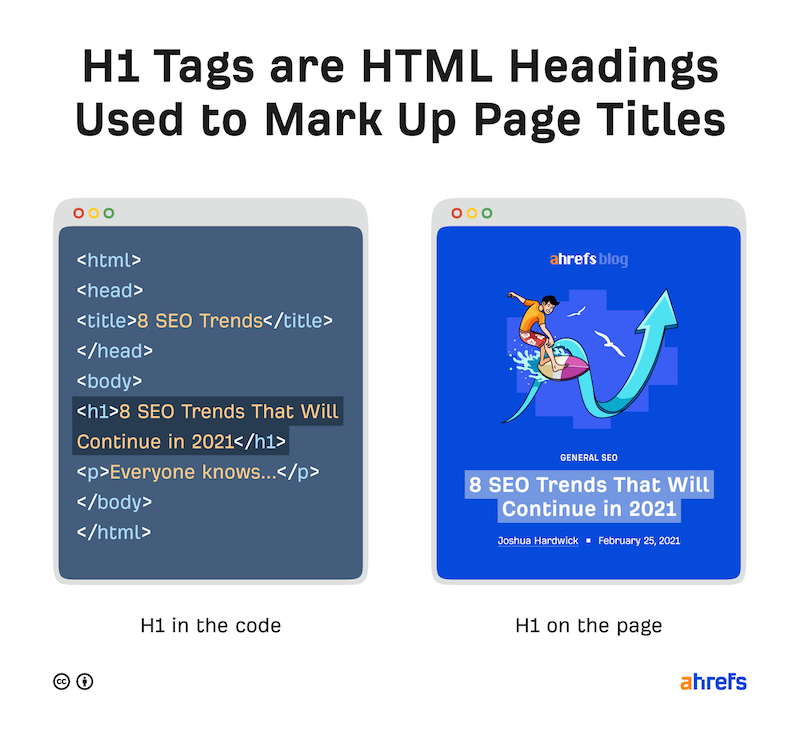
Source: https://ahrefs.com/blog/h1-tag/
Why Use the Product Name in H1s?
The formula is predictable:
H1: ProductName™
Subheading: A 20–30 word explanation covering category, audience, use case, and differentiation.
This happens for understandable reasons. Founders are attached to the name. Brand teams want prominence. Investors talk about building awareness. There’s often a belief that differentiation begins with a label rather than clarity.
But consider this real life example:
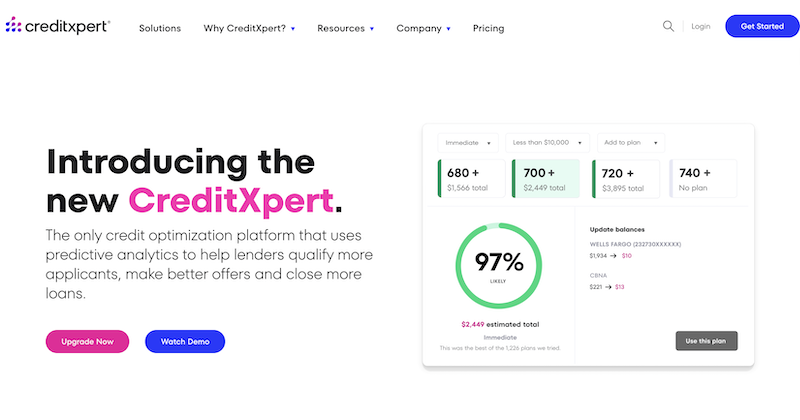
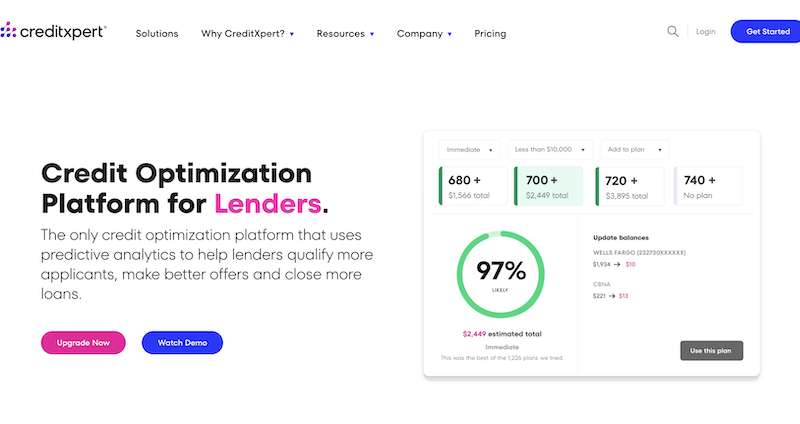
CreditXpert
Without context, that phrase could refer to a newsletter, a consultancy, a credit card product, or underwriting software. The visitor has to resolve the category before they can evaluate relevance.
And in B2B, relevance is the first filter - not brand affinity.
Before someone cares about your name, they need to understand what you do.
Risk: You Lose the Users Attention
Web visitors don’t read websites linearly. They scan for meaning anchors. The H1 is the primary anchor on the page - the element that frames everything that follows.
When the headline doesn’t immediately answer three core questions:
- What is this?
- Who is it for?
- Why should I care?
The brain must work harder to interpret the page.
That extra processing may only take a few seconds, but those seconds matter. Cognitive load delays relevance assessment.
And when relevance isn’t obvious, attention drops.
Behavioral research on user attention and bounce rates shows that many visitors make split-second decisions about whether a page is relevant.
Often leaving within the first few seconds if they don’t find what they’re looking for.
As a result, when clarity is replaced with ambiguity at the headline level, engagement tends to drop.
A Trademark Is a Brand Asset
Inside your organisation, your product name carries weight. It represents strategy, roadmap decisions, customer wins, and internal culture.
Outside your organisation, it is simply a label.
Meaning is not inherent in a trademark or proprietary name. It is accumulated through exposure, association, and experience. Established brands can lead with their names because recognition already carries context. Emerging brands do not yet have that advantage.
Leading with a novel trademark in your H1 is similar to introducing yourself at a conference by stating only your nickname. It may feel distinctive, but it forces the other person to ask a follow-up question before they can decide whether the conversation is relevant.
Online, that follow-up rarely happens.
The H1 Is Not a Branding Billboard
This conversation is often framed incorrectly as an SEO debate. It isn’t about keyword stuffing or manipulating rankings.
It’s about information architecture.
Compare two versions:
Version A
H1: Credit Expert™
Subheading: AI-powered credit risk analysis platform for modern lenders and fintech teams.
Version B
H1: Credit decisioning software for lenders
Subheading: Meet Credit Expert™, built for underwriting teams that need faster, safer approvals.
In Version B:
- The category is explicit.
- The audience is explicit.
- The use case is implied.
- The brand still exists.
Meaning comes first. Brand attaches to clarity.
The second structure reduces ambiguity without diminishing brand presence. In fact, it strengthens it by tying the name directly to a clearly understood category.
In AI, Ambiguity Gets Penalised
Search behaviour is evolving.
AI systems summarise pages, extract entities, compare solutions, and generate recommendations. These systems rely on strong semantic anchors to classify what a company does.
When the primary headline is vague, interpretation shifts to secondary signals - body copy, metadata, backlinks, external references. The more inference required, the greater the risk of misclassification, dilution, or omission.
Imagine an AI system tasked with identifying the best credit risk tools for lenders.
A homepage clearly anchored in that category presents a direct match.
A homepage led by a novel trademark requires additional interpretation before alignment can be established.
Humans prefer clarity because it reduces effort.
Machines prefer clarity because it reduces ambiguity.
The trajectory is the same in both cases.
Put Meaning & Clarity Before Brand
This approach can feel uncomfortable internally. Brand prominence feels strategic. Leading with the name feels confident.
But memorability follows meaning - not the other way around.
You build brand through repetition, consistency, proof, distribution, and customer experience. A homepage headline does not create awareness in isolation. What it does create is comprehension.
A meaning-first structure ensures that every visitor immediately understands the category and relevance. Once that is established, the brand can attach itself to something concrete.
Clarity first. Brand second.
The Meaning-First Principle
Use this framework to evaluate your current H1.
- Can someone accurately describe what you do after reading only the headline?
- Is the category recognisable without insider context?
- Does the headline reduce cognitive load rather than increase it?
- Could a human (or an AI system) easily classify your product based on it?
Headline structures that consistently support clarity include:
- [Category] for [Audience]
Example: Credit decisioning software for lenders. - [Outcome] for [Audience]
Example: Reduce loan defaults without slowing approvals. - [Category] that helps [Audience] achieve [Outcome]
The product name can then be introduced naturally in the subheading or as an appositive:
Credit Expert™: Credit decisioning for lenders.
Brand does not disappear.
It becomes contextualised.
Addressing the Objections
“But we need to build brand awareness.”
Awareness is built through repeated exposure and positive association over time. If clarity increases engagement and improves conversion, more people will encounter and remember the name.
Hiding meaning behind the name does not accelerate awareness; it delays understanding.
“What about category creation?”
If you are defining a new category, you must describe it explicitly. Category creation requires explanation, not abstraction.
Replacing explanation with a proprietary label increases the educational burden on your audience.
“Isn’t this just about SEO keywords?”
No. This is about reducing ambiguity. Clear category anchors happen to align with how search engines and AI systems interpret content — but the core benefit is improved comprehension.
Final Thoughts
A homepage is not a press release.
It is not a brand manifesto.
It is a decision environment designed to reduce uncertainty and accelerate relevance.
If your product name is not already widely recognised, using it as your H1 imposes a comprehension tax on every visitor. In a landscape where attention is scarce and interpretation increasingly automated, that tax compounds.
The question is not whether your brand deserves prominence.
The question is whether your headline makes understanding effortless.
If you want a structured way to audit and strengthen your messaging, we’ve created a conversion optimisation checklist that breaks down key areas to improve.
You can access it here: https://www.madx.digital/resource/cro-checklist
Frequently Asked Questions
Should You Use Your Brand Name as the H1?
Yes — but only under specific conditions.
You can lead with your brand name when:
- The brand already carries widespread recognition.
- The category is universally understood (e.g. "iPhone").
- The page is navigational in intent (e.g. a branded landing page).
If you are in growth mode and still building awareness, clarity will almost always outperform novelty.
Should the logo be the H1?
In most cases, no.
Your logo represents your brand identity, not the primary topic of the page. The H1 should communicate what the page is about — typically the product category, service, or core value proposition. If your logo is marked up as the H1, you’re effectively telling search engines and assistive technologies that your brand name is the main subject of every page.
That only makes sense on very specific pages, such as a purely navigational branded landing page. For a homepage focused on conversion, the H1 should clarify what you do and who it’s for — not simply restate your company name.
Should the meta title and H1 be the same?
They can be similar, but they shouldn’t be blindly duplicated.
The meta title (title tag) is primarily designed for search engine results. It should be optimised for click-through rate, include relevant modifiers, and often contain branding at the end.
The H1 is designed for on-page clarity and comprehension. It anchors the content for visitors once they land.
In many cases, the core phrase will overlap — especially if you’re using a category-led headline. However, the meta title may include additional context (e.g. "Best", "Platform", "Software", location modifiers, or your brand name), while the H1 should prioritise clean, immediate clarity.
Alignment is important. Duplication is optional.
What should the H1 be used for?
The H1 should define the primary topic and intent of the page.
On a homepage, that usually means clearly stating:
- The category or solution
- The target audience
- The core outcome or value
On other pages, the H1 should reflect the specific intent of that page — for example, a service page, blog article, or feature page.
Think of the H1 as the page’s thesis statement. If someone read only the H1, they should understand what the page is about.
Is the H1 tag important for SEO?
Yes — but not in the way many people think.
The H1 is not a ranking "boost button." Changing your H1 alone is unlikely to cause dramatic ranking shifts.
However, the H1 does help search engines understand page structure and topic hierarchy. A clear, descriptive H1 reinforces topical relevance and supports consistent semantic signals across the page.
More importantly, it impacts user behaviour. Clear headlines improve comprehension and reduce friction. When visitors understand a page quickly, engagement improves — and engagement is a far stronger long-term performance driver than minor technical tweaks.
In short: the H1 supports SEO by improving clarity, not by gaming algorithms.
.png)
Latest articles
What we've published in the past 30 days — across SEO, GEO, content, and digital PR.