.png)
.webp)





.webp)
SEO
Calculating...
Apr 2026
Why B2B SaaS Marketers Should NOT Measure SEO Traffic
Most B2B SaaS teams track SEO traffic, not revenue. Here’s why traffic is misleading in 2026 and how to measure buying-stage visibility that drives pipeline.


Most B2B SaaS teams think rising traffic means SEO is working.
Sessions are up.
Charts look healthy. Green arrows. Reports feel positive.
But the lead pipeline in your CRM isn’t moving.
And now with AI Search, chasing clicks can actually cost you traffic. AI Overviews answer many questions directly in the SERP.
Nearly 60 percent of searches now end without a click (SparkToro).
SEO has changed, but the way marketers report has not. Most teams still judge success by traffic instead of revenue.
Key Data Summary
- Nearly 60% of searches now end without a click (SparkToro)
- 79% of B2B buyers say AI changed how they research software (G2 2025)
- AI search leads convert ~40% better than traditional search (G2 2025)
- 75% of B2B buyers prefer a rep-free buying experience (Gartner)
- Shortlists are typically 2–3 vendors (G2 2025)
- Volume concentrates at the top of the funnel. Revenue concentrates at evaluation stage
Why Most Marketers Chase Traffic
Traffic became the default SEO KPI for predictable reasons.
It Was Easy to Measure
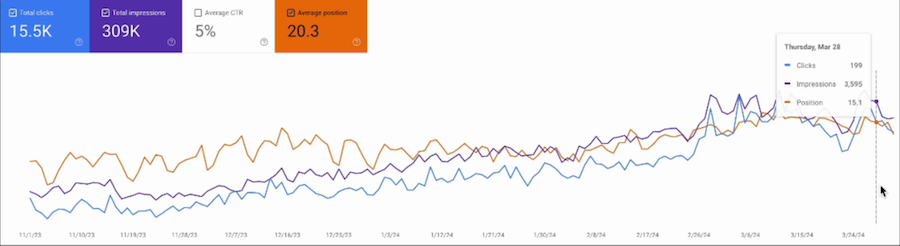
Sessions are visible. They are easy to compare month over month. They move fast enough to feel like progress.
Inbound marketing reinforced this habit. Drive traffic. Convert a percentage. Nurture leads. Close revenue. The funnel looked linear, and traffic felt like the main lever you could control.
That logic only works if buyers move cleanly from awareness to decision.
B2B buying does not work like that anymore.
It Was Easy to Report
“Traffic up 42 percent” fits neatly into a slide.
Pipeline influenced by organic search is harder to report on. Attribution models are imperfect. Multi-touch journeys are messy.
Now look at public SaaS investor presentations.
You will see ARR, net revenue retention, billings growth, operating margin, and free cash flow.
You will not see organic traffic.
If traffic were a true north star, it would appear in investor reporting. It does not.
It Felt Safer Than Revenue
Agencies can promise traffic.
Revenue depends on positioning, pricing, sales execution, retention, and expansion. Traffic depends mostly on rankings and search demand.
Traffic feels controllable.
The issue is not that traffic is useless.
It is that different types of traffic carry different levels of commercial value.
AI Overviews Killed Informational Traffic
In 2025, many SaaS brands saw sudden traffic volatility. The main driver was not penalties. It was AI Overviews.
Top-of-funnel informational queries are broad educational searches made before someone is ready to buy. For example:
- “what is crm”
- “crm meaning”
- “benefits of crm”
These queries historically drove large volumes of traffic.
Now many are answered directly in the SERP. What once required a click is summarised by AI.
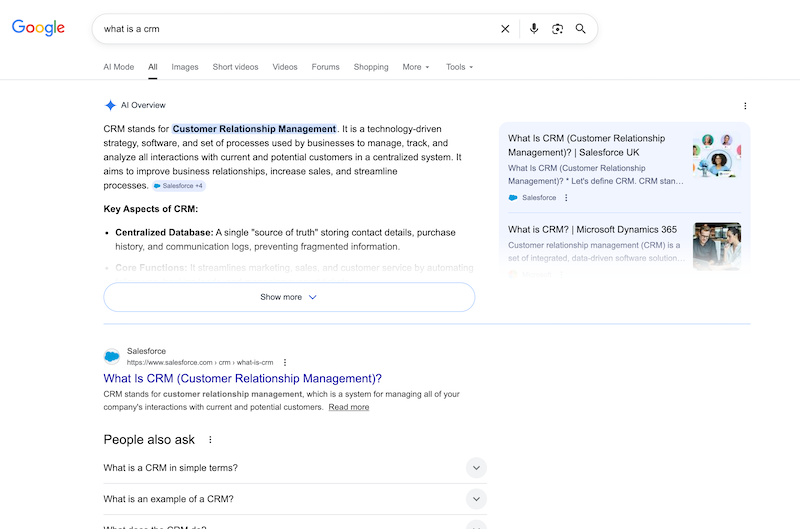
Nearly 60 percent of searches now end without a click (SparkToro).
Informational traffic was always the easiest layer to grow.
It is now the most vulnerable.
So if awareness traffic declines, the real question becomes:
Where does revenue actually live in search?
Where Revenue Actually Lives in Search
To understand why traffic can mislead, map search behaviour to the buying journey.
In most SaaS categories, the highest search volume sits at the beginning of that journey. As buyers move closer to a decision, search volume drops while commercial intent increases.
Most SEO strategies overweight the left side of that journey.
At MADX, we simplify it into four stages:
Problem → Solution → Compare → Decision
Each stage carries a different level of pipeline impact.
1. Problem Stage

The buyer is trying to understand an issue.
Examples:
- “crm meaning”
- “improve onboarding process”
- “manage remote teams”
These queries drive the most traffic and build awareness.
They also sit furthest from revenue and are most exposed to AI Overviews.
2. Solution Stage
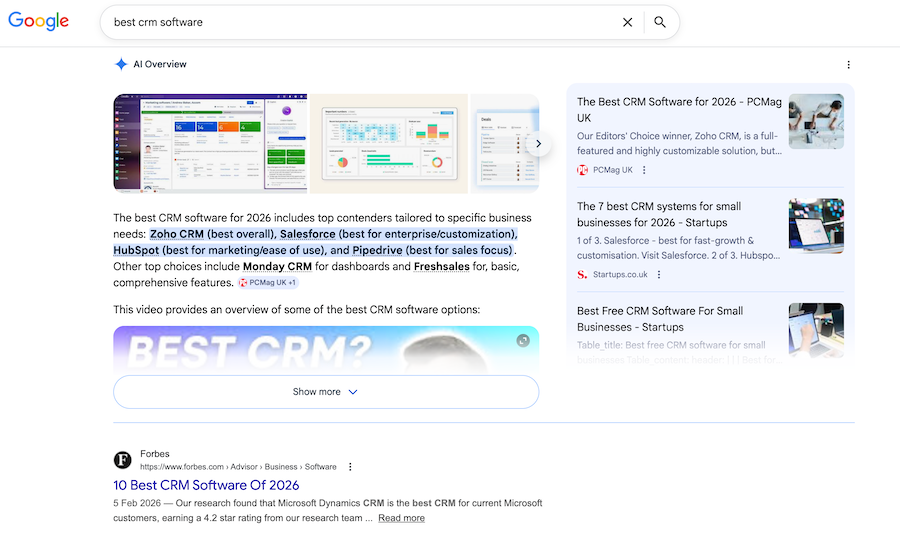
The buyer knows software may be required.
Examples:
- “project management software”
- “time tracking tools”
- “crm software for startups”
- “best crm software”
Volume is lower. Intent is stronger. Buyers are exploring options, but many vendors are still in consideration.
3. Compare Stage
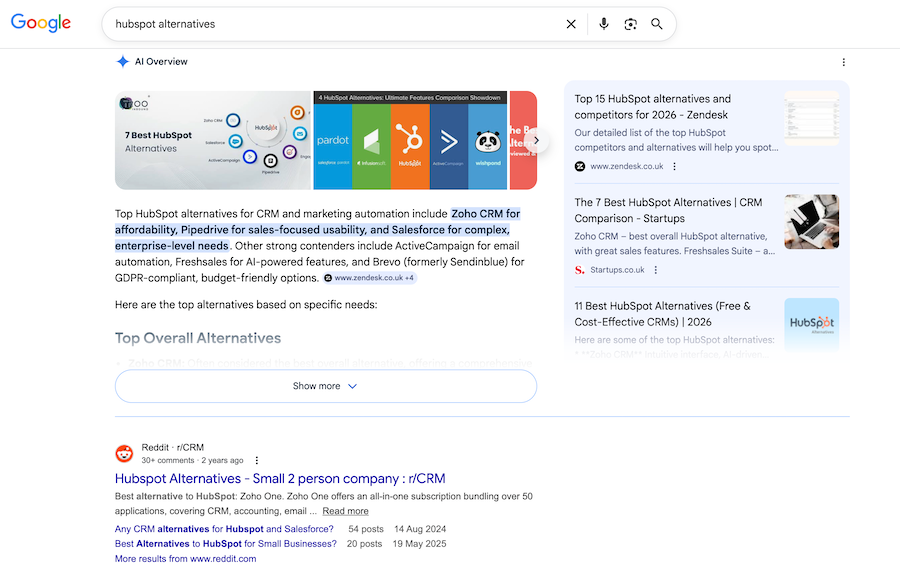
The buyer is evaluating specific vendors.
Examples:
- “hubspot alternatives”
- “hubspot vs salesforce”
Volume drops again. Intent increases significantly. This is where shortlists are formed.
G2 reports B2B shortlists are typically two to three vendors. If you are not visible here, you are unlikely to be considered.
4. Decision Stage
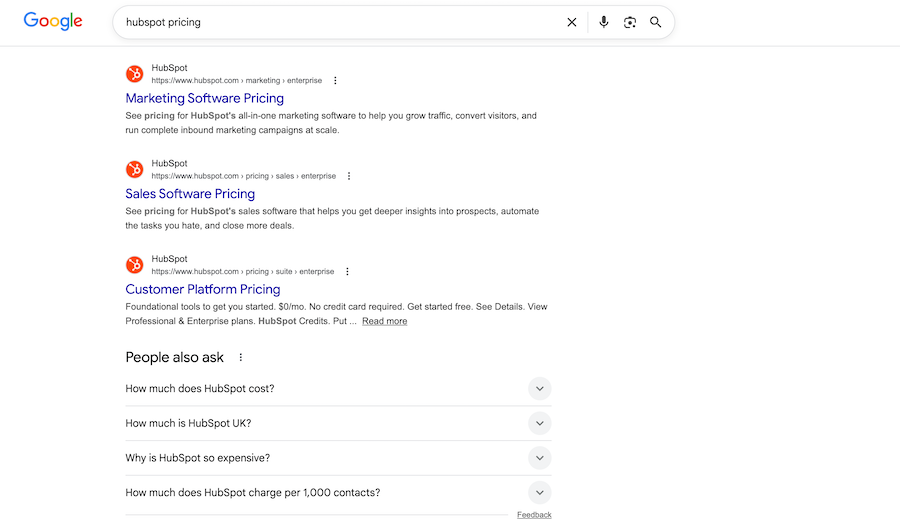
The buyer is preparing to act.
Examples:
- “[brand] pricing”
- “[brand] reviews”
- “[brand] demo”
- “crm free trial”
These queries have the lowest volume and the highest buying intent. They sit closest to revenue creation.
Gartner shows 75% of B2B buyers prefer a rep-free experience. Pricing pages, comparison content, and demo flows often influence the deal before sales is involved.
As you move from Problem to Decision, traffic volume decreases.
Pipeline impact increases dramatically.
HubSpot: A Real-World Example
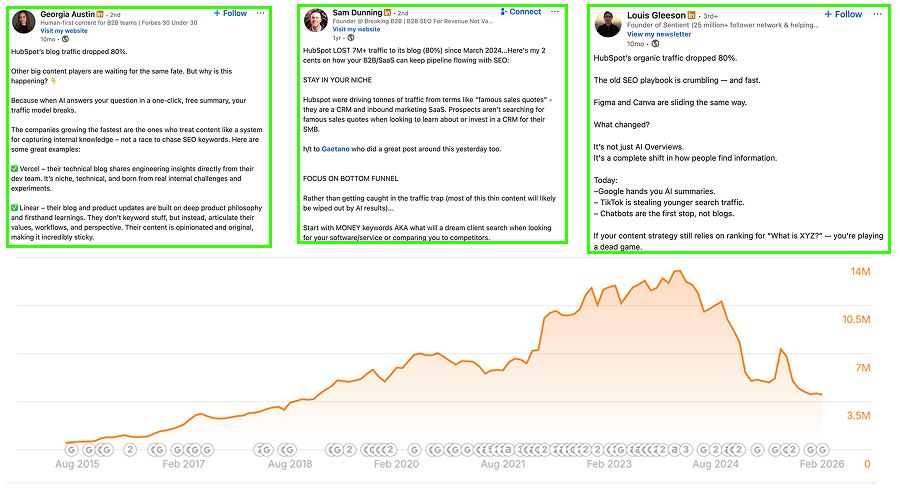
In 2025, HubSpot became one of the most discussed brands in SEO after external tools reported an organic traffic decline of approximately ~80%.
The decline was concentrated in top-of-funnel informational content, much of it impacted by AI Overviews.
But business performance told a different story.
In its 2025 earnings report, HubSpot reported approximately $3.13B in total revenue, representing roughly 19% year-over-year growth, alongside continued growth in subscription revenue.
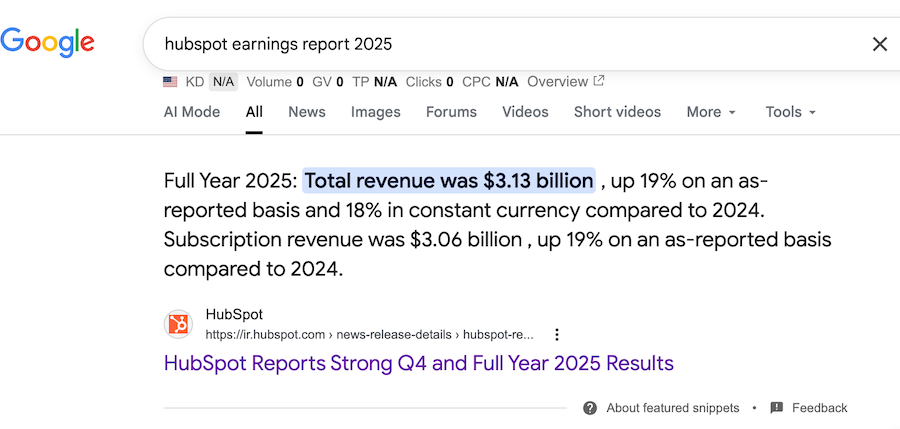
Traffic fell.
Revenue grew.
Top-of-funnel traffic declined. Commercial visibility remained.
To understand why, look at the types of keywords that carry buying intent.
Let’s break down CRM keyword data by buying stage.
Problem Stage (High Volume, Low CPC)
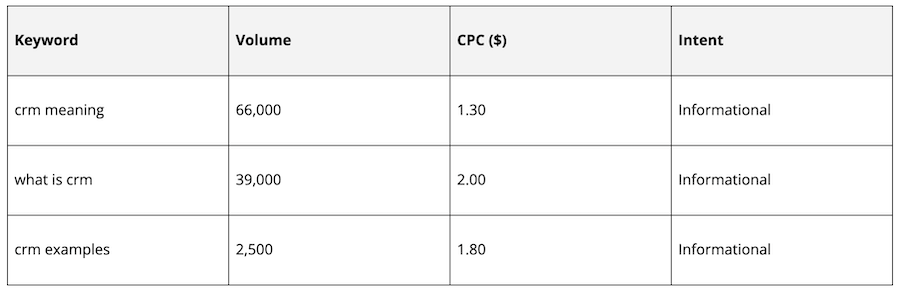
High traffic potential.
Lower CPC.
Lower direct revenue intent.
Compare Stage (Moderate Volume, Higher CPC)
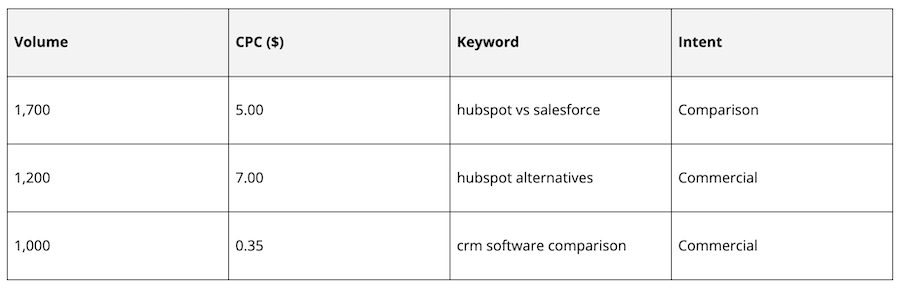
Volume drops.
CPC rises.
Commercial signal strengthens.
Decision Stage (Lower Volume, Highest CPC)
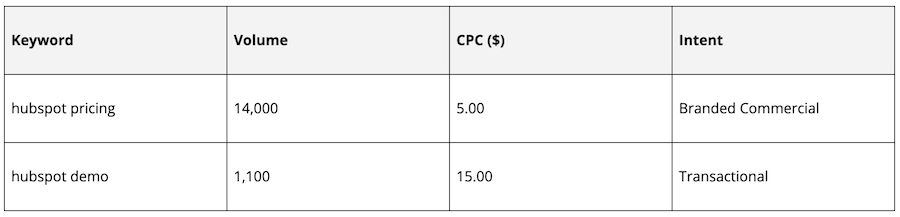
Volume is smaller.
CPC is significantly higher.
CPC is not revenue, but it is a strong proxy. Businesses pay more for keywords that generate customers.
The market prices intent.
High-volume informational queries are cheaper because they rarely convert.
Comparison, pricing, demo, and branded terms are more expensive because they sit closer to revenue.
SEO dashboards optimise for volume.
The market optimises for value.
Shift From Traffic Volume to Revenue Visibility
If traffic is a vanity metric, the fix is not “more traffic.”
It is tighter focus and better reporting.
1. Define a Commercial Keyword Set
Start with a fixed group of keywords tied directly to pipeline creation. Not hundreds. A deliberate set aligned to:
- Comparison terms
- Alternatives terms
- Pricing queries
- Demo and trial queries
- Core branded searches
Track this group consistently. Measure share of voice against competitors. Treat it as your commercial visibility index.
2. Build Content That Supports Evaluation
Once you know which keywords matter, build content that genuinely serves them.
That usually means:
- Clear comparison pages that address real objections
- Transparent pricing breakdowns
- ROI calculators and implementation guides
- Security and compliance documentation
- Strong review platform presence
These assets support supplier selection and validation. That is where revenue influence concentrates.
3. Report Like SEO Is a Revenue Channel
Instead of leading with total sessions, report:
- Visibility for your commercial keyword set
- Demo starts and trials influenced by organic
- Pipeline generated where organic was a touchpoint
- Branded search growth as a demand signal
As brand demand rises, more conversions may be attributed to the homepage or branded queries. That does not mean SEO stopped working. It often means SEO created demand earlier in the journey.
Traffic becomes context.
Commercial visibility becomes the KPI.
What Your C-Suite Actually Cares About
Look at how serious SaaS companies measure performance.
They report:
- ARR
- Net revenue retention
- Billings
- Margin expansion
- Free cash flow
They do not report blog traffic.
Growth is measured by revenue durability and leverage.
If SEO reporting does not connect to those outcomes, it becomes a cost centre instead of a growth lever.
Traffic is a proxy. Buying-stage visibility is leverage. Revenue influence is the outcome.
If you want to realign your SEO strategy and reporting around pipeline and revenue - not vanity metrics - book a strategic audit focused on buying-stage visibility with MADX Digital.
Frequently Asked Questions
Is SEO traffic a vanity metric for B2B SaaS?
SEO traffic becomes a vanity metric when it is disconnected from buying intent and revenue. High-volume informational visits rarely convert in B2B SaaS. What matters more is visibility at the comparison, pricing, and demo stage where pipeline is created.
What should B2B SaaS companies measure instead of organic traffic?
Instead of total sessions, B2B SaaS teams should measure commercial keyword visibility, demo and trial starts from organic search, pipeline influenced by SEO, and branded search growth. These metrics reflect evaluation-stage intent and revenue contribution, not surface-level awareness.
How do AI Overviews impact B2B SEO traffic?
AI Overviews reduce clicks on informational queries by answering questions directly in the search results. This disproportionately affects top-of-funnel content. Evaluation, comparison, and branded searches remain more resilient because buyers still need to assess vendors before making decisions.
Which keywords actually drive revenue in SaaS SEO?
Revenue typically comes from comparison, alternatives, pricing, demo, and branded queries. These searches indicate active evaluation. While search volume is lower than informational terms, conversion rates and commercial intent are significantly higher, making them more valuable for pipeline generation.
How do you measure SEO’s impact on pipeline and revenue?
Measure SEO’s impact by tracking demo starts, free trials, influenced pipeline, and closed revenue where organic search was a touchpoint. Use multi-touch attribution models to reflect real buying journeys rather than relying on last-click traffic reporting.
Want this done for your brand? Get a free AI visibility audit.
Get my free AI visibility audit.png)
Latest articles
What we've published in the past 30 days — across SEO, GEO, content, and digital PR.