Vercel SEO Futurists Redefining Web Horizons
Revolutionize your Vercel site's digital presence with our innovative SEO strategies, enhancing its performance in the modern web ecosystem.
.webp "moonpay logo")


.webp "kurve logo")


.webp "huggg logo")
























What We Offer
Five disciplines, engineered as one system. Pick a starting point or run them in parallel.
GEO & AI Search
We boost visibility in AI search using advanced GEO strategies.
Traditional SEO
We optimize site speed, structure, and performance to boost rankings.
Content Strategy
We create SEO content that builds trust, traffic, and conversions.
Digital PR
We earn authoritative links and mentions to boost rankings and visibility.
Link Building
We build high-quality backlinks to boost authority, traffic, and rankings.
SEO for modern frameworks deployed on Vercel
Vercel's edge infrastructure is excellent for performance. The SEO challenges are at the implementation layer — rendering, metadata, and structured data. We handle all of it.
01
Technical SEO audit for Vercel-deployed sites
We audit the full technical stack — rendering strategy, dynamic routing, metadata generation, sitemap handling, and Edge Middleware configurations. Vercel sites built with Next.js, Nuxt, or other modern frameworks have SEO considerations that standard audits miss. We assess the real picture before building any strategy on top.
02
Rendering strategy, Core Web Vitals, and metadata implementation
We review your rendering configuration (SSR, SSG, ISR, CSR), test how Googlebot actually sees your pages, and resolve any gaps between what users experience and what search engines index. We then leverage Vercel's edge network and Next.js Image Optimization to improve Core Web Vitals, and implement correct metadata generation, structured data, canonical tags, and Open Graph tags across all dynamic and static routes.
03
Keyword research and content architecture
We map the keyword landscape for your product or market and build the content architecture that targets the right queries across your Vercel site. For developer tools, APIs, and technical SaaS products, this typically means product-led content, documentation SEO, use-case pages, and comparison content alongside traditional blog content. We build the full content strategy, not just the blog.
04
Authority building and deployment coordination
We build backlinks and brand authority through targeted placements in the technology and developer publications that matter for your product. Vercel's CI/CD pipeline means your site changes frequently — we monitor organic performance continuously and coordinate with your team around deployments that could affect SEO, catching regressions before they translate into ranking losses.
Customer · Kurve
"MADX is a top player in the premier league. Constantly delivering value above and beyond high quality execution. They help shape our strategic thinking impacting our entire inbound marketing engine."

Oren Greenberg
Co-founder - KURVE
How We Deliver SEO for Sites Built and Deployed on Vercel
Technical SEO audit, rendering review, and indexation assessment
Vercel sites — typically built with Next.js, Nuxt, or other modern frameworks — have SEO considerations that don't apply to traditional CMS sites. Rendering strategy, dynamic routing, metadata generation in code, sitemap handling, and Edge Middleware configurations all affect organic performance in ways that standard audits miss. We assess the full technical stack, test how Googlebot actually sees your pages, and identify any gaps between user experience and what search engines index. Getting this right is foundational — everything built on a rendering or indexation problem is wasted until it's resolved.
Core Web Vitals and metadata implementation
Vercel's edge network and Next.js Image Optimization give you a real performance advantage — but only when the implementation is correct. We measure your Core Web Vitals (LCP, CLS, INP) in both lab and field data, identify the specific bottlenecks, and implement the optimisations that improve Google's page experience signals. For Vercel and Next.js sites, we also implement correct metadata generation (Next.js Metadata API), structured data (JSON-LD), canonical tags, and Open Graph tags across all dynamic and static routes — this is where most Vercel SEO projects have the largest gaps.
Keyword research, content architecture, and authority building
We map the keyword landscape for your product or market and build the content architecture that targets the right queries across your Vercel site. For developer tools, APIs, and technical SaaS products on Vercel, this typically means product-led content, documentation SEO, use-case pages, and comparison content alongside traditional blog content. We build authority through targeted placements in the technology and developer publications that matter for your specific product — the channels, formats, and trust signals are different here, and we understand the ecosystem.
Ongoing monitoring and deployment coordination
Vercel's CI/CD pipeline means your site changes frequently — new routes, updated components, restructured content. We monitor organic performance continuously and coordinate with your team around deployments that could affect SEO, catching regressions from routing changes, framework upgrades, or new content patterns before they translate into ranking losses. Monthly reporting is clear and commercial: rankings, traffic, conversions, and what comes next.
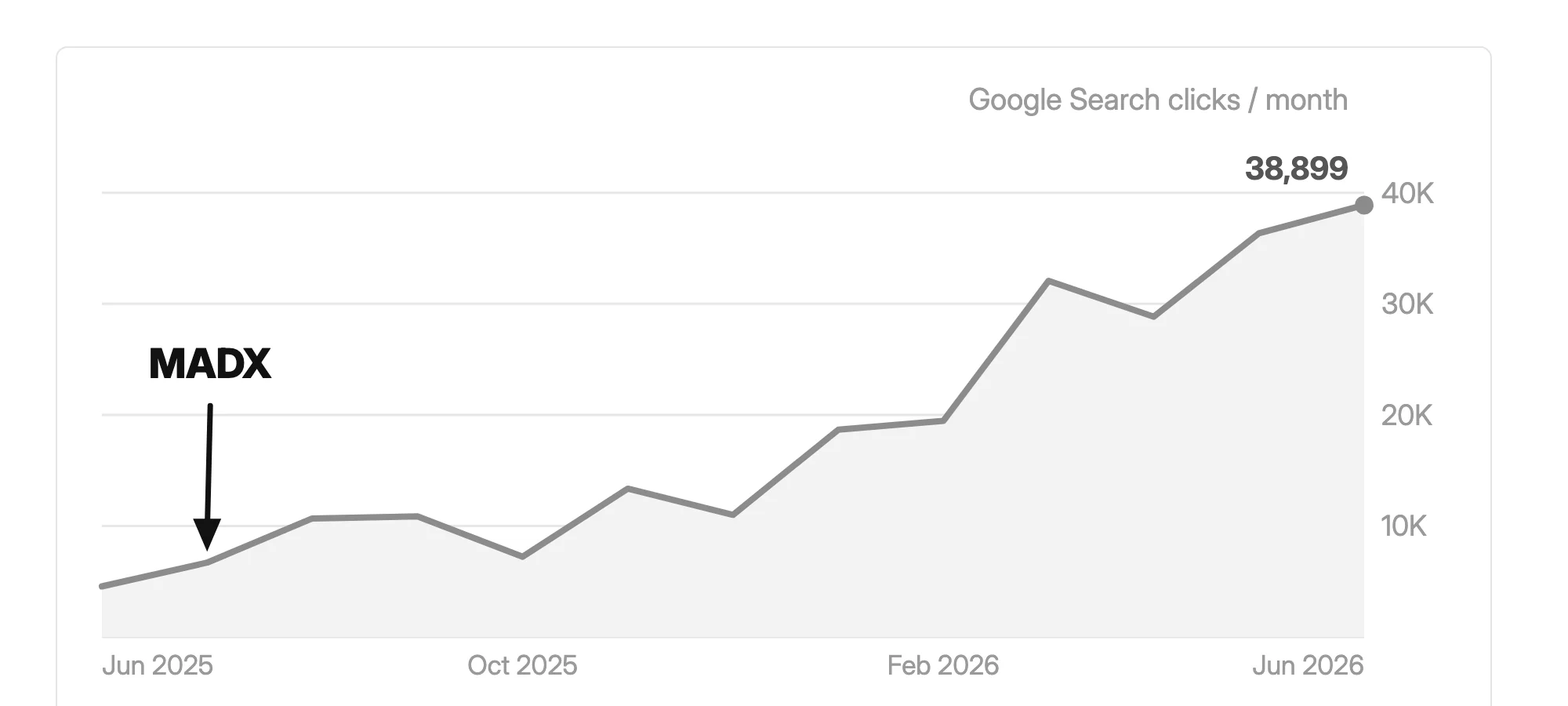
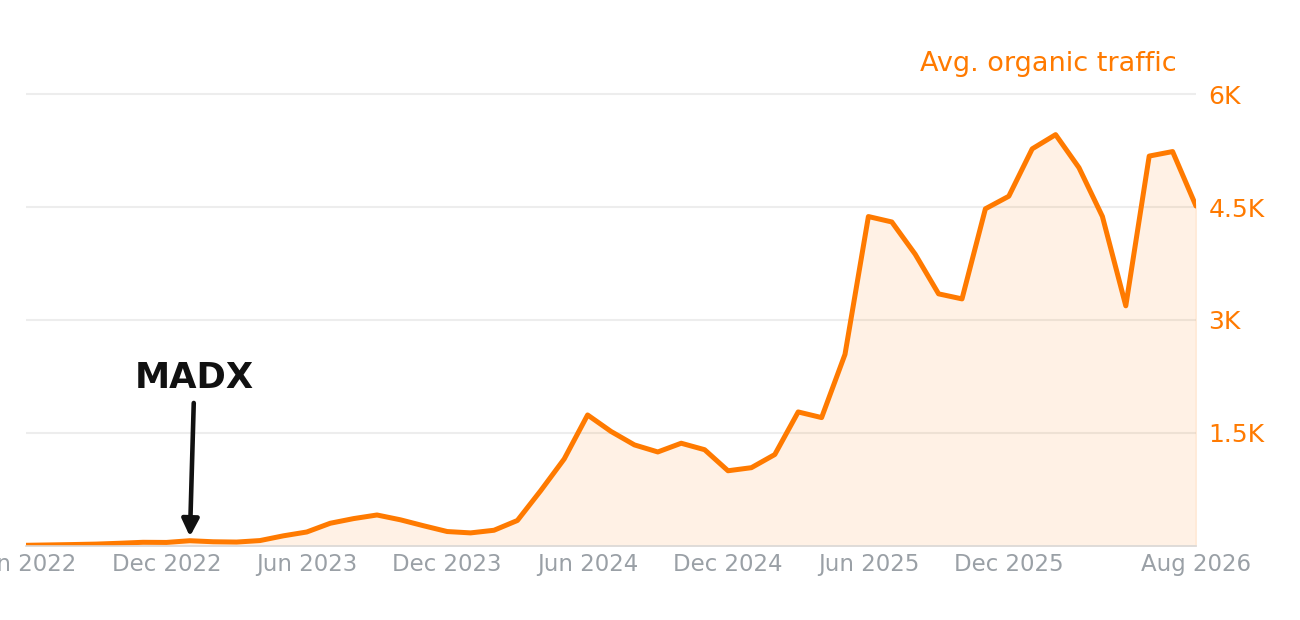
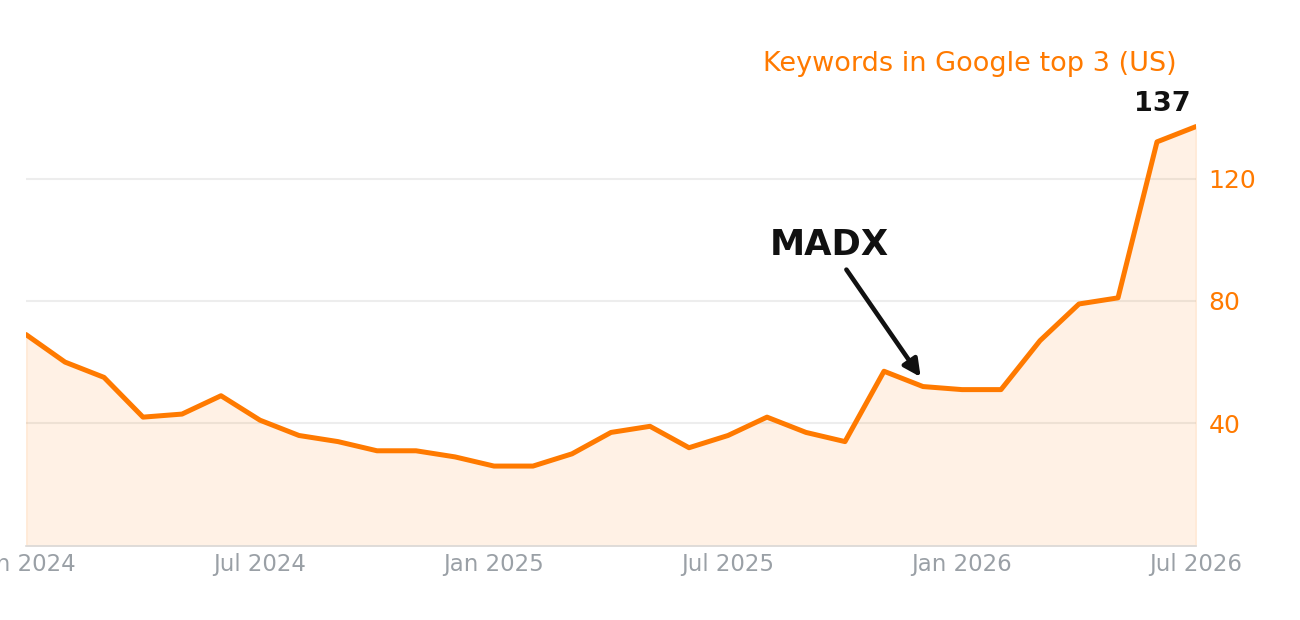
We Care About Results
Pipeline-tied reporting. Real numbers, real attribution, real outcomes.


WHY MADX?
Why SaaS teams choose MADX
The economics, speed and depth of an agency - without the bloat. We work as an extension of your team, not a vendor.
All-in-one team
Strategy, content, links, GEO — one roster, one Slack.
Real expertise
Senior practitioners on every account. No juniors learning on you.
Live reporting
Always-on dashboards tied to revenue, not vanity.
Built for SaaS
We only work with SaaS — so we move fast.

Perry Steward
Co-founder - MADX Digital
"We started MADX Digital because no agency was treating AI search like the structural shift it is. We're rebuilding the playbook for SaaS, and we'd love to show you ours."
we partner with brands who are ambitious about growth
Every engagement starts with a scoping call so we can confirm fit, timeline, and the right mix of technical, content, and authority work. No surprise scope, no bait-and-switch.
01 / 03
Scoping call
Tell us what you’re building.
15-min call. We’ll listen, ask sharp questions, and tell you honestly if we’re the wrong fit.
02 / 03
Choose your fit
Sprint, retainer or custom.
90-day sprint, monthly retainers or something custom. Starting from $2,500 /mo.
03 / 03
start the work
Month 1 delivery, no long waits.
Onboarding wraps in 2-3 weeks. First deliverables ship before the end of month one.
Frequently Asked Questions
Have more questions? Reach out to our sales team or schedule a call with our growth team
Is Vercel good for SEO?
Vercel's infrastructure is excellent for SEO from a performance standpoint — fast edge delivery, global CDN, and seamless Next.js integration make it straightforward to achieve strong Core Web Vitals. The SEO challenges on Vercel are almost entirely at the implementation level: how content is rendered, how metadata is generated, and how dynamic routes are handled. A well-implemented Vercel site can be among the fastest and most technically clean in any category. A poorly implemented one can be nearly invisible to search engines despite great content.
How does server-side rendering on Vercel affect SEO?
Server-side rendering (SSR) is generally the most reliable rendering approach for SEO on Vercel because it delivers fully rendered HTML to Googlebot on the first request. Static site generation (SSG) with Incremental Static Regeneration (ISR) is also SEO-friendly and often faster. Client-side rendering (CSR) is the most problematic for SEO because Googlebot's JavaScript execution is slower and less reliable than a browser's. The rendering strategy is one of the first technical decisions we assess.
What are the most common SEO issues on Vercel and Next.js sites?
The most common issues are: incorrect or missing metadata (hardcoded title tags, missing descriptions on dynamic routes), client-side rendering on content that should be server-rendered, sitemap gaps for dynamically generated routes, canonical tag errors across paginated or filtered content, and structured data inconsistently implemented across page types. These are all solvable — but they require deliberate implementation rather than relying on framework defaults.
How do you handle structured data and metadata in a Next.js project on Vercel?
We implement metadata using Next.js's Metadata API (App Router) or Head component (Pages Router), ensuring title, description, canonical, and Open Graph tags are correctly generated for all static and dynamic routes. For structured data, we implement JSON-LD via script tags in the document head, covering the schema types relevant to your content: Organisation, Article, FAQPage, BreadcrumbList, and product-specific schemas. We test every implementation against Google's Rich Results Test before it ships.
How long does SEO take to show results on a Vercel site?
Technical fixes — rendering corrections, metadata implementation, Core Web Vitals improvements — typically show ranking impact within 4–8 weeks. Content and authority building takes longer: 3–6 months to compound meaningfully. For Vercel sites with strong technical implementations held back by content gaps or low domain authority, the content and authority programme often delivers faster results because the technical foundation is already solid.
Ready to Win in AI Search?
Free GEO audit and a 30-min teardown of your current AI visibility. No pitch, no commitment.